What are the four steps of the DHCP (Dynamic Host Configuration Protocol) lease process (DORA), and which messages are broadcast vs. unicast?
Discover (broadcast), Offer (unicast), Request (broadcast), Acknowledge (unicast) — remember: DORA (Discover, Offer, Request, Acknowledge).
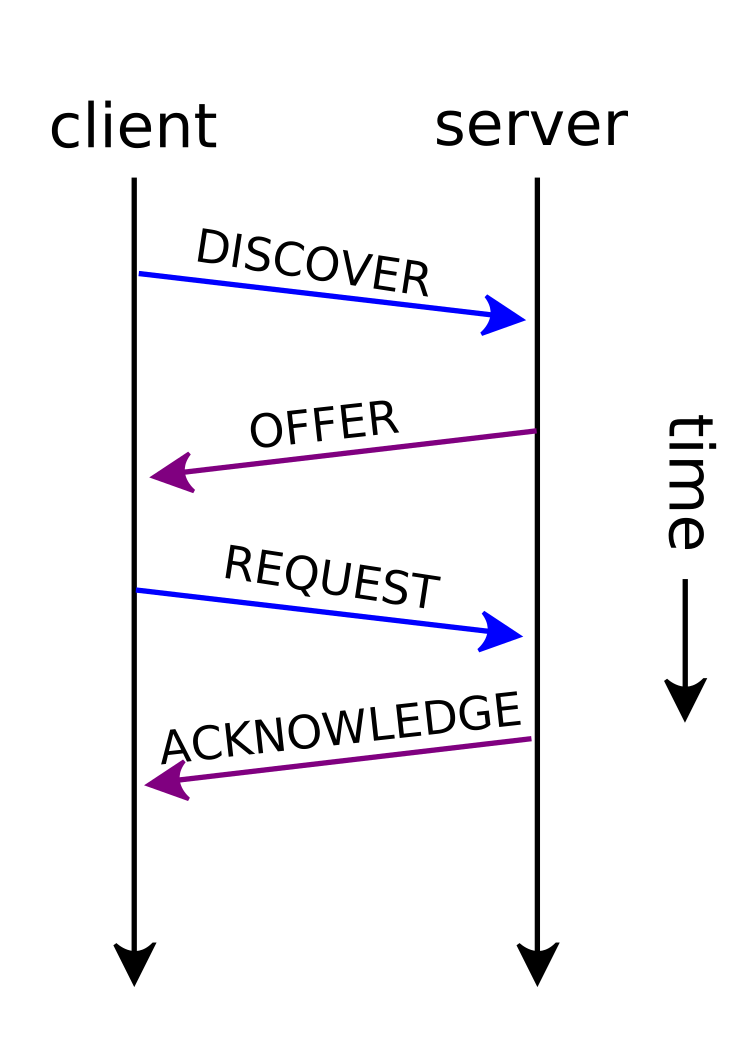
* The DHCP DORA message exchange. — Gelmo96, CC BY-SA 4.0, via Wikimedia Commons. *
| Step | Message | Direction | Type |
|---|---|---|---|
| 1 | DHCPDISCOVER | Client → Server | Broadcast |
| 2 | DHCPOFFER | Server → Client | Unicast |
| 3 | DHCPREQUEST | Client → Server | Broadcast |
| 4 | DHCPACK | Server → Client | Unicast |
Why each step matters:
- Discover — Client has no IP (Internet Protocol) yet, so it broadcasts "Is there a DHCP server out there?" (destination 255.255.255.255)
- Offer — Server responds with an available IP address and configuration parameters
- Request — Client broadcasts its acceptance (broadcast so other DHCP servers know the client chose a different server)
- Acknowledge — Server confirms the lease and the client can start using the IP
Note: Per RFC 2131, the Offer and Acknowledge can also be sent as broadcast in some implementations.
Tip: Remember DORA — Discover, Offer, Request, Acknowledge. The pattern alternates client→server→client→server: the client asks (Discover), the server offers, the client accepts (Request), the server confirms (Ack). The two client→server messages (Discover, Request) are broadcast; the two server→client replies (Offer, Ack) are unicast.
Go deeper:
 Dynamic Host Configuration Protocol (Wikipedia) — names the four DORA phases with per-message packet detail and broadcast/unicast behaviour.
- RFC 2131 — Dynamic Host Configuration Protocol — the canonical spec defining the DISCOVER/OFFER/REQUEST/ACK exchange and state machine.