What are the HTTP message types and what is the difference between HTTP and HTTPS?
GET requests data, POST and PUT upload data to the server; HTTP (port 80) sends everything in clear text, while HTTPS (port 443) encrypts and authenticates it.
HTTP Message Types:
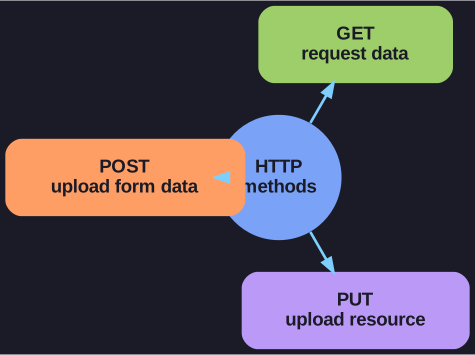
* GET pulls data; POST and PUT push data up to the server. *
| Method | Purpose |
|---|---|
| GET | Client requests data from web server (e.g., request HTML pages) |
| POST | Uploads data files to the web server (e.g., form data) |
| PUT | Uploads resources or content to the web server (e.g., images) |
HTTP vs HTTPS:
| Feature | HTTP | HTTPS |
|---|---|---|
| Port | 80 | 443 |
| Security | Not secure | Encrypted |
| Use case | Non-sensitive data | Sensitive data (login, banking) |
Important: HTTP is not a secure protocol. For secure communications sent across the internet, HTTPS should be used.
HTTPS uses encryption and authentication to secure communication between browser and server.
Go deeper:
-
 SSL, TLS, HTTP, HTTPS Explained — how HTTPS wraps HTTP in encryption.
 -
 HTTP request methods (MDN) — GET, POST, PUT and the rest, with safety/idempotency notes.
 -
HTTPS (Wikipedia) — port 443, TLS, and why plain HTTP is insecure.