Quiz Entry - updated: 2026.07.30
What are the main categories of dynamic routing protocols, and how do IGPs differ from EGPs?
Interior Gateway Protocols (IGPs) route within a single organization (OSPF (Open Shortest Path First), EIGRP (Enhanced Interior Gateway Routing Protocol), RIP (Routing Information Protocol), IS-IS). The only Exterior Gateway Protocol (EGP) is BGP, which routes between organizations (autonomous systems) on the internet.
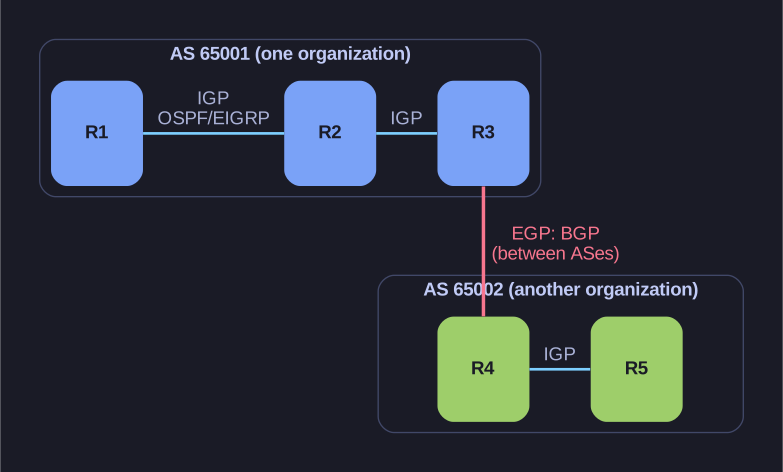
* IGP within an AS, BGP between ASes. *
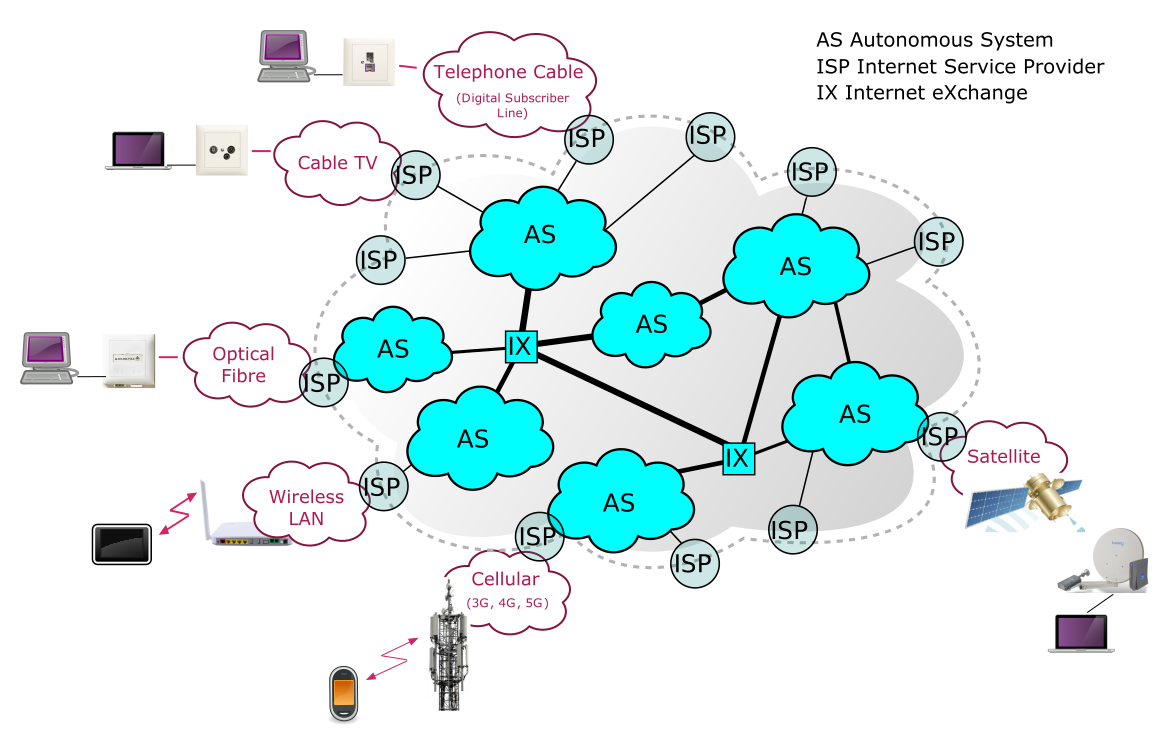
* Autonomous systems, ISPs and exchanges. — BWenk, CC BY-SA 4.0, via Wikimedia Commons. *
| Category | Protocol | Type | Metric | IPv4 | IPv6 |
|---|---|---|---|---|---|
| IGP — Distance Vector | RIPv2 | Distance Vector | Hop count (max 15) | Yes | RIPng |
| IGP — Distance Vector | EIGRP | Advanced Distance Vector | Bandwidth + delay composite | Yes | EIGRP for IPv6 |
| IGP — Link-State | OSPFv2/v3 | Link-State | Cost (based on bandwidth) | Yes | OSPFv3 |
| IGP — Link-State | IS-IS | Link-State | Cost | Yes | IS-IS for IPv6 |
| EGP | BGP-4 | Path Vector | AS path attributes | Yes | BGP-MP |
IGP vs EGP:
- IGP (Interior): Routes within one organization's network (your company). Designed for fast convergence and efficient internal routing
- EGP (Exterior): Routes between different organizations on the internet. BGP is the only EGP — it's the protocol that runs the internet's backbone
Three components of any dynamic routing protocol:
- Data structures: Tables and databases stored in RAM (e.g., OSPF link-state database, EIGRP topology table)
- Messages: Packets exchanged between routers to discover neighbors and share routing info (e.g., OSPF LSAs, EIGRP Updates)
- Algorithms: The math that determines the best path (e.g., Dijkstra's SPF for OSPF, DUAL for EIGRP)
Go deeper:
 Interior gateway protocol (Wikipedia) — IGP (within an AS) vs EGP (between ASes) and the distance-vector/link-state split.