Quiz Entry - updated: 2026.07.30
What are the six TCP control flags (control bits)?
URG (urgent), ACK (acknowledgment), PSH (push), RST (reset), SYN (synchronize), FIN (finish).
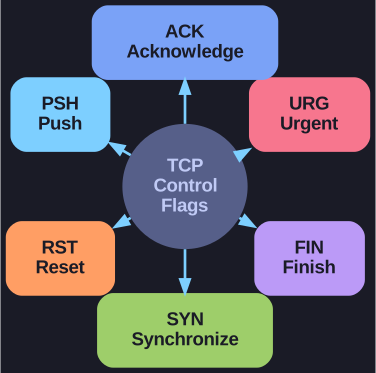
* The six 1-bit control flags carried in the TCP header. *
Six TCP Control Flags:
| Flag | Name | Purpose |
|---|---|---|
| URG | Urgent | Indicates urgent data; urgent pointer field is significant |
| ACK | Acknowledgment | Acknowledgment field is significant; used after initial SYN |
| PSH | Push | Push function; receiver should pass data to application immediately |
| RST | Reset | Reset the connection due to error or timeout |
| SYN | Synchronize | Synchronize sequence numbers; used in connection establishment |
| FIN | Finish | No more data from sender; used in session termination |
Flag Usage in Connections:
| Phase | Flags Used |
|---|---|
| Connection setup | SYN, SYN+ACK, ACK |
| Data transfer | ACK, PSH |
| Connection close | FIN, ACK |
| Abort connection | RST |
Key insight: Control bits are found in the TCP header and indicate the purpose of each segment.
Go deeper:
 RFC 9293 §3.1 — Header Format — the authoritative definition of each control bit (URG, ACK, PSH, RST, SYN, FIN).
- TCP segment structure — Flags — Wikipedia's per-flag table for the carousel.