What are the steps involved in setting up a GSM call to a mobile subscriber?
An incoming call triggers a chain: GMSC queries HLR for location → MSC/VLR look up the subscriber → paging signal sent via BTS → phone rings → connection established.
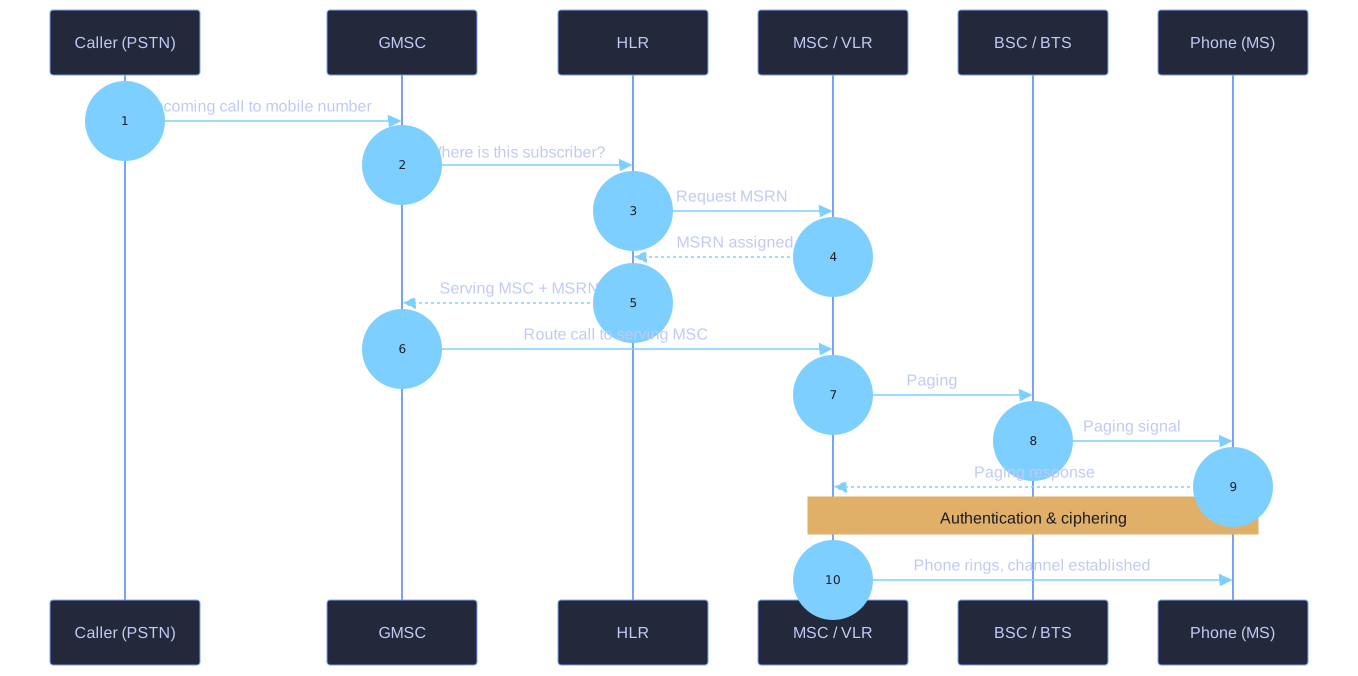
* Incoming-call routing: GMSC queries HLR, MSRN routes, paging finds the phone. *
Step-by-step call setup:
- Call initiation — someone dials the mobile number
- Routing to GMSC — the call reaches the Gateway MSC
- Signaling/routing — GMSC signals the call
- HLR query — GMSC asks the HLR: "Where is this subscriber?"
- MSRN assignment — HLR asks the current VLR to assign a Mobile Subscriber Roaming Number (MSRN) and identifies the current MSC
- Location lookup — MSC/VLR retrieves the subscriber's current cell location
- Paging — the MSC sends a paging signal through the BSC/BTS to find the phone
- Response — the phone responds to the paging signal
- Security — authentication and ciphering are activated
- Connection — the phone rings, the user answers, and the voice channel is established
Key insight: This entire process happens in just a few seconds. The complexity is hidden from both the caller and the called party — they just experience "the phone rings."
Tip: The MSRN is a temporary phone number assigned for routing purposes only — it tells the network exactly which MSC to route the call through. It's like a temporary forwarding number that exists only for the duration of the call setup.
Go deeper:
 Harald Welte — What happens on a protocol level when I switch on my phone? (CCC, 2018) — a live walkthrough of the real 2G/3G attach, paging and authentication signalling.
 GSM procedures (Wikipedia) — the location-update, paging and call-setup message flows in detail.