What are the steps of a GSM handoff when both base stations share a common MSC?
The old BSS informs the MSC, the MSC prepares a path to the new BSS, the new BSS allocates a radio channel, and only then is the mobile told to switch — finishing with the MSC rerouting the call and releasing old resources.
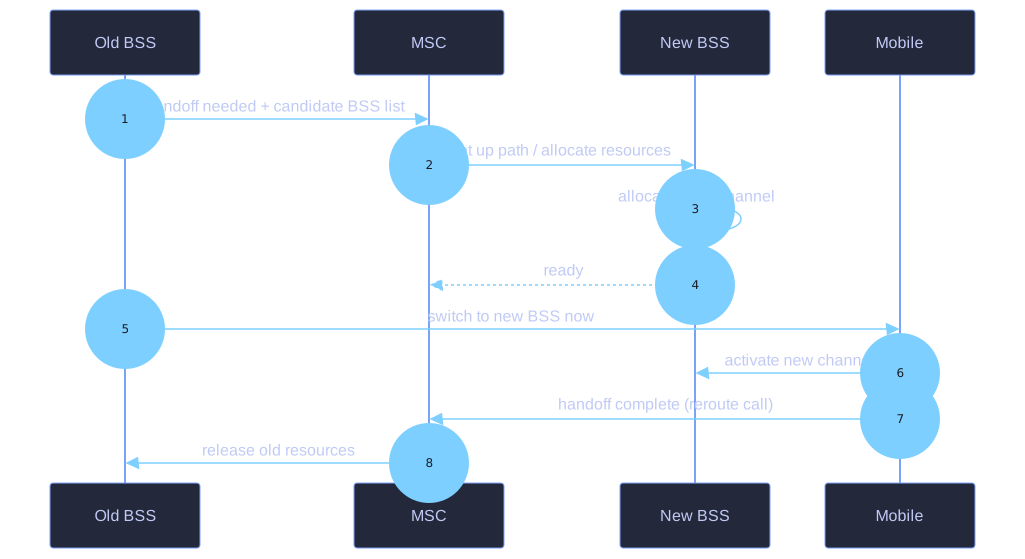
* Intra-MSC handoff: prepare the new path, then tell the mobile to jump. *
The eight steps:
- Old BSS → MSC: informs it of the impending handoff and provides a list of one or more candidate new BSSs
- MSC sets up the path (allocates resources) to the new BSS
- New BSS allocates a radio channel for the mobile
- New BSS signals MSC and old BSS: ready
- Old BSS tells the mobile: perform handoff to the new BSS
- Mobile and new BSS signal to activate the new channel
- Mobile signals via the new BSS to the MSC: handoff complete → MSC reroutes the call
- MSC and old BSS release the old resources
The design insight — prepare before you jump: everything on the network side (steps 1–4) is ready before the mobile is told to move (step 5). The radio switch itself is the riskiest moment, so the protocol minimizes what can go wrong at that point. Note this is still a hard handover (break-before-make) — GSM's TDMA radio can't hold two links at once.
Go deeper:
 GSM handover (Electronics Notes) — the intra-MSC procedure and the timing-burst detail behind preparing the new channel before the phone jumps.