Quiz Entry - updated: 2026.07.30
What are the steps of an LTE handover between two base stations in the same network?
The source BS picks the target and pre-arranges everything (steps 1–2), the mobile switches early (step 3) while the source forwards buffered traffic (step 4), and only afterwards is the S-GW tunnel re-pointed (steps 5–7).
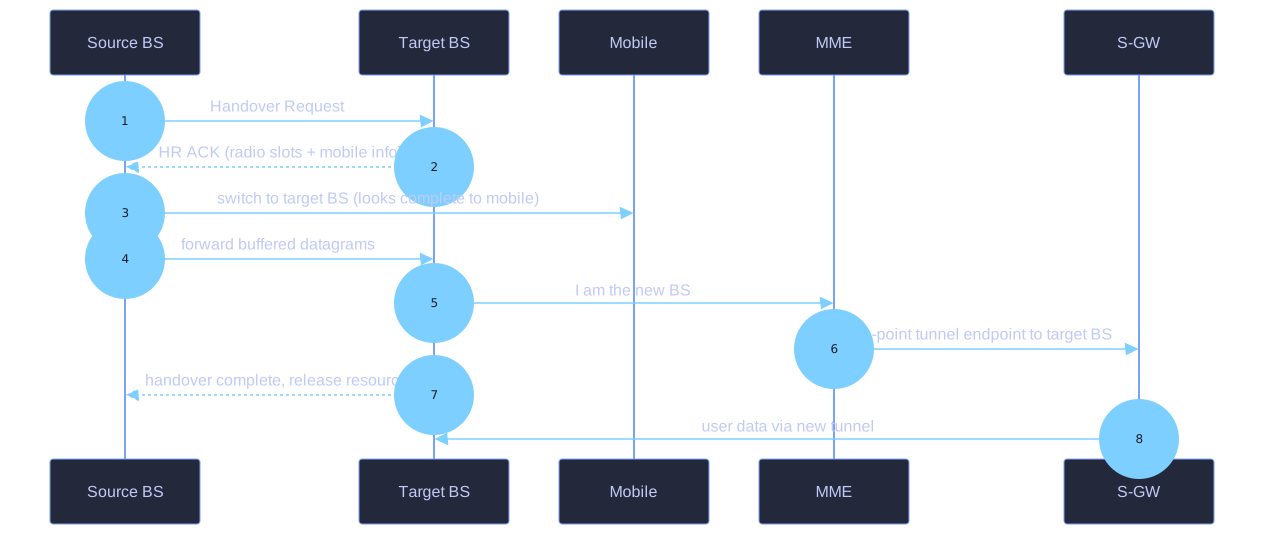
* LTE X2 handover: switch early; the S-GW tunnel is re-pointed afterwards. *
The seven steps:
- The current (source) BS selects the target BS and sends it a Handover Request
- The target BS pre-allocates radio time slots and responds with HR ACK, including info for the mobile
- The source BS informs the mobile of the new BS — the mobile can now send via the new BS: to the mobile, the handover looks complete
- The source BS stops sending datagrams to the mobile and instead forwards them to the new BS (which forwards over its radio channel)
- The target BS informs the MME that it is the new BS; the MME instructs the S-GW to change its tunnel endpoint to the target BS
- The target BS ACKs back to the source BS: handover complete — the source can release resources
- The mobile's datagrams now flow through the new tunnel from target BS to S-GW
Two elegant details worth noticing:
- Data forwarding (step 4) bridges the gap: packets already in flight toward the old BS aren't lost — they chase the mobile through the old→new BS detour until the tunnel switch catches up
- The mobile is done at step 3, long before the core network (steps 5–7) — radio-side speed matters most, core-side bookkeeping can lag behind
Go deeper:
 E-UTRA (Wikipedia) — the X2 and S1 interfaces that carry the handover signaling and data forwarding.
- LTE handover overview (ShareTechNote) — an engineer's state-diagram view mapping onto the source-eNB → target-eNB → path-switch sequence.