What are the three 5G usage scenarios (eMBB, URLLC, mMTC), and what is each one for?
eMBB = enhanced mobile broadband (fibre-like internet, AR/VR); URLLC = ultra-reliable low-latency communication (industry 4.0, medicine, vehicles); mMTC = massive machine-type communication (huge numbers of IoT devices). eMBB shipped first; URLLC and mMTC came with Release 16.
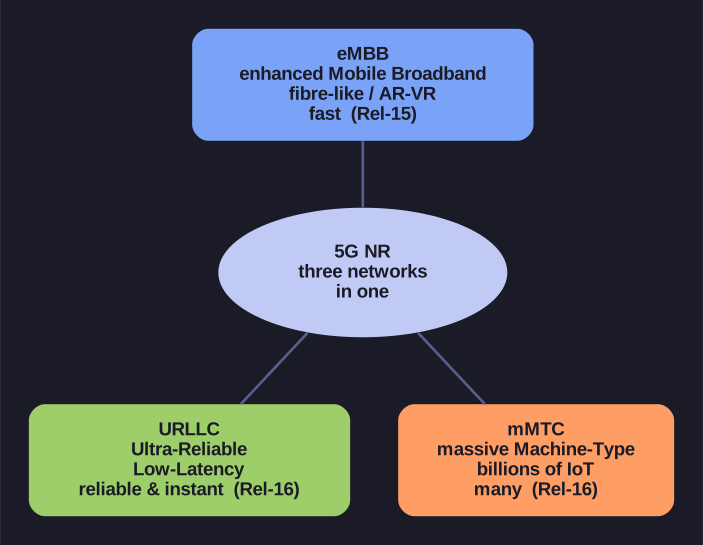
* 5G is three networks in one: eMBB, URLLC, mMTC. *
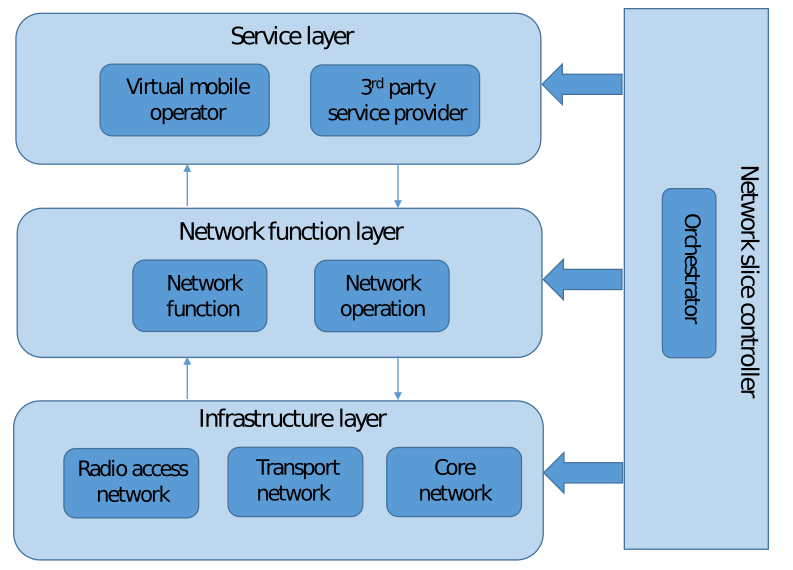
* Slicing serves eMBB, URLLC and mMTC on one network. — Foukas et al., Public domain, via Wikimedia Commons. *
The three scenarios (3GPP's use-case framework, adopted late 2017 in Lisbon):
| Scenario | Full name | Purpose & examples | Release |
|---|---|---|---|
| eMBB | enhanced Mobile Broadband | "Internet for everyone over 5G, like fibre" — AR/VR streaming | Release 15 |
| URLLC | Ultra-Reliable Low-Latency Communications | improvements mainly in the core network (latency + reliability) — smart industry / Industry 4.0, medical applications | Release 16 |
| mMTC | massive Machine-Type Communications | many (tiny) devices communicating with each other (IoT) — "from the coffee machine to the toaster" | Release 16 |
The key insight: 5G is not one network but three networks in one, each optimised for a different demand. A VR headset (eMBB) wants raw bandwidth; a factory robot (URLLC) wants guaranteed sub-ms response; a field of soil sensors (mMTC) wants to connect billions of cheap devices. The "complete" 5G system serves all three.
Tip: eMBB = fast, URLLC = reliable & instant, mMTC = many. These three corners define the 5G design space, and the network-slicing concept exists precisely to serve them simultaneously on one infrastructure.
Go deeper:
 5G network slicing (Wikipedia) — slicing is the mechanism that serves eMBB/URLLC/mMTC simultaneously on one infrastructure.
 Network Slicing — S-NSSAI in detail (ShareTechnote) — concrete per-scenario slices and how each maps to eMBB/URLLC/mMTC demands.