What are the three approaches for dealing with risks, and when does Grundschutz alone over- or under-protect?
Pure Grundschutz (standard measures), pure risk analysis (custom measures), or the BSI's combined two-stage approach — because a flat standard level inevitably over-protects some assets and under-protects others.
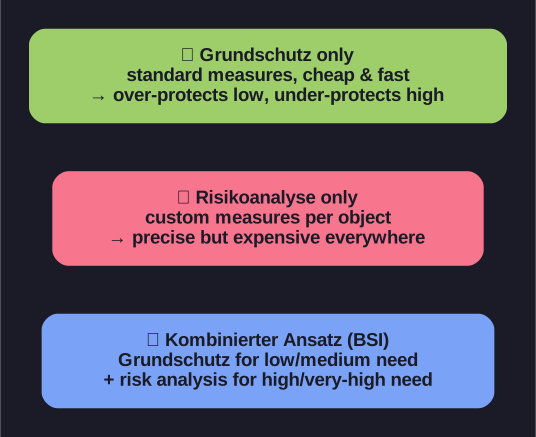
* Three ways to handle risk — Grundschutz only, Risikoanalyse only, and the BSI kombinierter Ansatz. *
1. Grundschutz — standardized measures, only a general risk consideration. Cheap and fast, but: the standard level is a horizontal line across all assets — assets with low protection need get Über-Schutz (over-protection, wasted money), assets with high need get Unter-Schutz (dangerous gaps).
2. Risikoanalyse — specific measures from a detailed risk analysis per object. Precise but expensive if done for everything.
3. Kombinierter Ansatz (combined, two-stage — the BSI way):
- Grundschutz for objects with low and medium protection needs
- Additional risk analysis for objects with high and very high protection needs
This gets ~80% of the coverage at standard cost and spends analysis effort only where it pays off.
Tip: The picture to remember: a flat waterline (Grundschutz) over a skyline of varying building heights (protection needs) — some buildings drown, some tower above.
Go deeper:
 Lektion 7: Risikoanalyse (BSI Online-Kurs) — Wann zusätzlich zum Grundschutz eine Risikoanalyse nötig ist (hoher/sehr hoher Schutzbedarf).