Quiz Entry - updated: 2026.07.30
What are the three flags in an ICMPv6 (Internet Control Message Protocol version 6) RA (Router Advertisement) message, and what does each one tell the host to do?
A flag = use SLAAC (Stateless Address Autoconfiguration) for addressing, O flag = get other config from DHCPv6 (Dynamic Host Configuration Protocol version 6), M flag = get managed (full) config from DHCPv6.
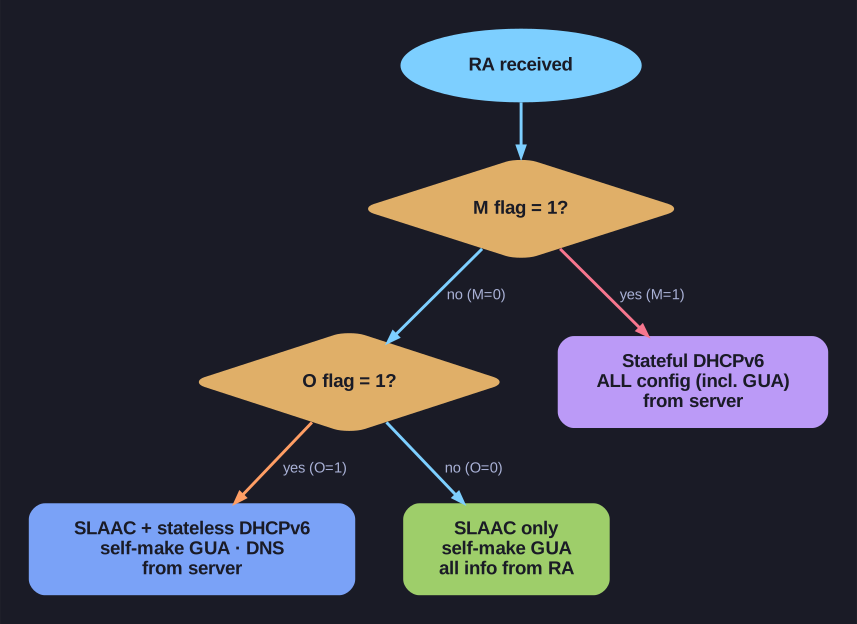
* RA flag decision tree (M then O). *
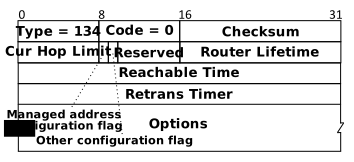
* ICMPv6 Router Advertisement message format. — Michel Bakni, CC BY-SA 4.0, via Wikimedia Commons. *
| Flag | Name | When Set to 1 |
|---|---|---|
| A | Address Autoconfiguration | Host should use SLAAC to create its own IPv6 GUA (Global Unicast Address) |
| O | Other Configuration | Host should contact a stateless DHCPv6 server for additional info (DNS (Domain Name System), domain name) |
| M | Managed Address Configuration | Host should contact a stateful DHCPv6 server for all IPv6 config |
Flag combinations and their meaning:
| A | O | M | Method |
|---|---|---|---|
| 1 | 0 | 0 | SLAAC only (default) |
| 1 | 1 | 0 | SLAAC + Stateless DHCPv6 |
| 0 | 0 | 1 | Stateful DHCPv6 only |
Tip: A = Address yourself, O = get Other stuff from a server, M = let the server Manage everything. The default is A=1, O=0, M=0 — pure SLAAC.
Go deeper:
 RFC 4861 — Neighbor Discovery for IPv6 — defines the M, O (RA header) and A (prefix option) flags normatively.