Quiz Entry - updated: 2026.07.30
What are the three goals of network security (CIA triad)?
Confidentiality (only intended recipients can read it), Integrity (data is unaltered), and Availability (timely, reliable access for authorized users).
The CIA triad is the standard checklist for what "secure" means — every security control ultimately protects one or more of these three properties, and most attacks aim to break one of them. Mapping attacks to the triad helps you reason clearly: eavesdropping breaks confidentiality, tampering breaks integrity, and a denial-of-service flood breaks availability.
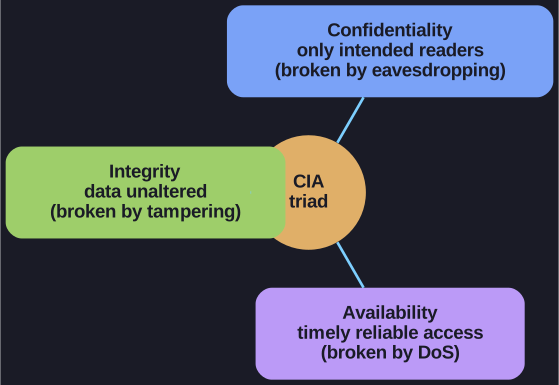
* The three security goals and the attack that breaks each: eavesdropping, tampering, and denial of service. *
- Confidentiality: Only intended recipients can read the data — typically enforced with encryption and access control, so an interceptor sees only scrambled bytes.
- Integrity: Assurance that data has not been altered during transmission — checked with hashes or digital signatures, so any tampering is detected.
- Availability: Assurance of timely and reliable access to data for authorized users — protected with redundancy and backups, because data that's secret and intact is still useless if you can't reach it.
Two types of network security:
- Network infrastructure security: Physical security of devices, preventing unauthorized access
- Information security: Protection of data transmitted over the network
Go deeper:
 NIST CSRC Glossary — Confidentiality — authoritative definition: preserving authorized restrictions on access and disclosure.
- NIST CSRC Glossary — Integrity — NIST: guarding against improper modification or destruction, plus non-repudiation and authenticity.
- Information security (Wikipedia) — ties Confidentiality, Integrity, and Availability together as one CIA-triad overview.