What are the three main components of a typical mortise lock (Einsteckschloss / Buntbartschloss)?
A mortise lock has three working parts: the Riegel (bolt) that physically blocks the door, the Zuhaltung (tumbler) that holds the bolt locked until lifted by the key, and the Haltefeder (retaining spring) that keeps the tumbler engaged.
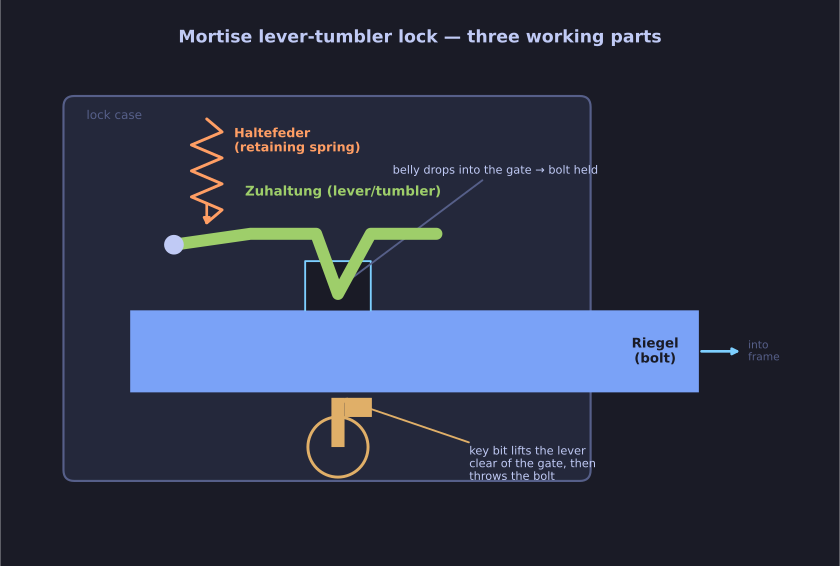
* Mortise lever-tumbler lock — Riegel (bolt), Zuhaltung (lever) sitting in the bolt's gate, and Haltefeder (spring); the key lifts the lever, then throws the bolt. *
The three components:
| Part (DE) | Part (EN) | Job |
|---|---|---|
| Riegel | Bolt | The piece that protrudes into the door frame and physically resists the door opening |
| Zuhaltung | Tumbler / lever | A pivoting plate that drops into a notch on the bolt, locking it in position |
| Haltefeder | Retaining spring | Keeps the tumbler pressed down into the bolt's notch by default |
The motion sequence when you turn the key:
1. Key inserted → ward channel matches the key bit
2. Key turns  → bit lifts the Zuhaltung against the Haltefeder spring
3. Zuhaltung clears the notch in the Riegel
4. Continued rotation → key bit pushes the Riegel sideways
5. Bolt retracts into the lock body → door can open
Why "Buntbart" (varied/shaped beard)?
The traditional skeleton-key bit (the part with cuts) is called a "Bart" (beard); bunt here means varied/shaped. A Buntbartschloss uses a key with a non-symmetric, custom-shaped beard — historically these were the ornate cut-out shapes you see on antique skeleton keys. Modern cylinder-based mortise locks have replaced them in homes, but they're still common in older European apartments and interior doors.
Tip: This lock type is the conceptual stepping stone to the Chubb / Zuhaltungsschloss — a Chubb adds multiple Zuhaltungen at different heights, all of which must be lifted exactly the right amount, like a lever-tumbler safe.
Go deeper:
 Mortise lock (Wikipedia) — lock body, strike plate and cylinder/trim, and how it seats in the door mortise.