What are the three management levels (Management-Ebenen), and how do they differ?
Normative, strategic, and operational leadership — distinguished by time horizon, hierarchy level, and the kind of questions they answer.
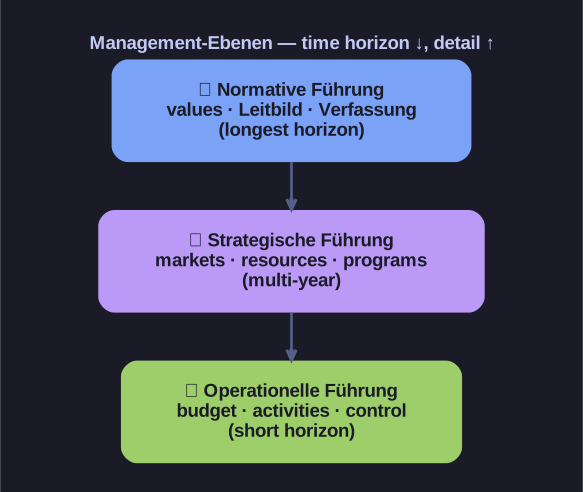
* The three Management-Ebenen — normative → strategic → operational; horizon shortens, detail grows. *
| Level | Concern | Typical artifacts |
|---|---|---|
| Normative Führung | Why do we exist? What are our values and rules of the game? — longest horizon, top of hierarchy | Unternehmenspolitik (corporate policy), Leitbild, constitution, culture |
| Strategische Führung | What do we do, in which markets, with what resources? — multi-year horizon | Strategic planning, programs, missions |
| Operationelle Führung | How do we execute day-to-day? — short horizon | Budget, activities/measures, control |
The two axes on the model: Zeithorizont (time horizon — longest at the top) and Hierarchie (organizational level). All three levels together drive Unternehmens-Entwicklung (corporate development).
Tip: Security documents map 1:1 onto these levels — security policy (normative), security strategy/concepts (strategic), security procedures and operations (operational). That's why a policy signed by the board carries different weight than a SOC runbook.
Go deeper:
 St. Galler Management-Modell (Wikipedia DE) — das Rahmenwerk, das normatives, strategisches und operatives Management verbindet (Bleicher).