Quiz Entry - updated: 2026.07.30
What are the three methods for dynamic IPv6 GUA configuration?
SLAAC (host builds its own GUA from the RA prefix), SLAAC + stateless DHCPv6 (self-built address, DHCPv6 supplies DNS/etc.), and stateful DHCPv6 (server assigns the address). The RA's M/O flags select which.
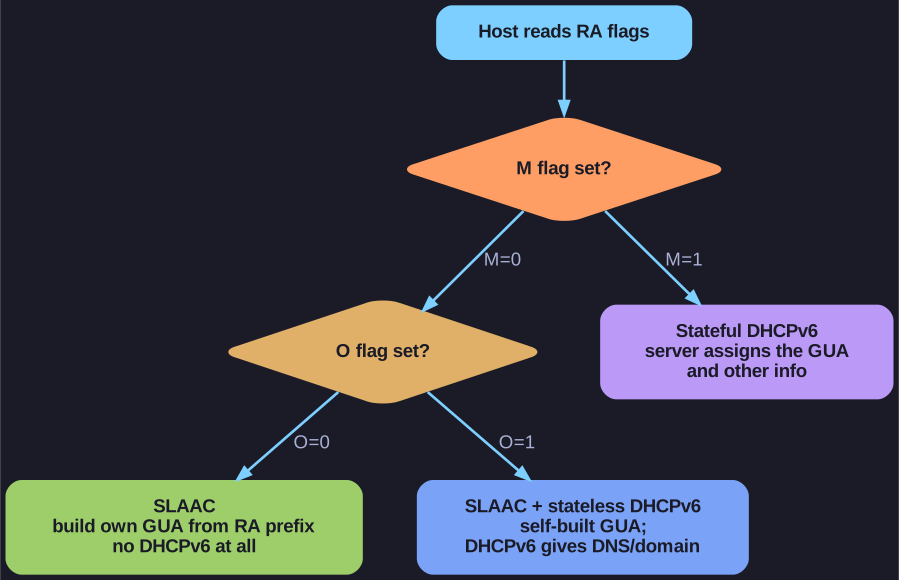
* How the RA's M and O flags steer a host to each of the three addressing methods. *
Three Methods for Dynamic IPv6 GUA Assignment:
| Method | Address From | Other Info From |
|---|---|---|
| SLAAC | Self-generated (prefix from RA) | RA message |
| SLAAC + Stateless DHCPv6 | Self-generated | DHCPv6 server |
| Stateful DHCPv6 | DHCPv6 server | DHCPv6 server |
Method 1: SLAAC (Stateless Address Autoconfiguration)
- Host creates own GUA using prefix from Router Advertisement (RA)
- No DHCPv6 server needed
- Default gateway = Router's LLA (from RA source address)
Method 2: SLAAC + Stateless DHCPv6
- Host creates own GUA using SLAAC
- Contacts DHCPv6 server for DNS, domain name, etc.
- DHCPv6 server does NOT assign addresses
Method 3: Stateful DHCPv6
- Similar to IPv4 DHCP
- DHCPv6 server assigns GUA, DNS, domain name
- Server tracks address assignments (stateful)
Key insight: The RA message flags (M and O) tell hosts which method to use.
Go deeper:
 Stateless Address Autoconfiguration, SLAAC (NetworkAcademy.IO) — free walkthrough of SLAAC plus where stateless and stateful DHCPv6 fit in.
- IPv6 — SLAAC (Wikipedia) — how hosts self-configure from RA prefixes and when DHCPv6 supplements them.
- RFC 4862 — IPv6 Stateless Address Autoconfiguration — the primary spec for the stateless mechanism.