What are the three types of copper cabling?
UTP (unshielded twisted-pair), STP (shielded twisted-pair), and coaxial cable.
All three carry data as electrical signals on copper, but they differ in how they fight interference and where they are used:
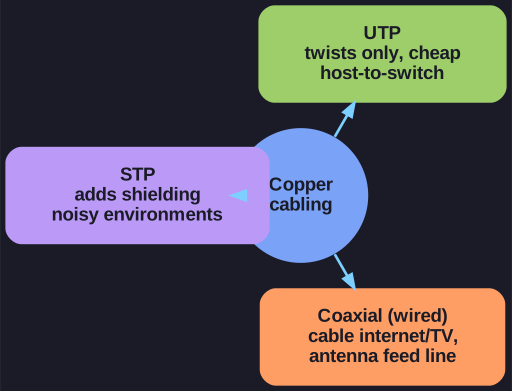
* UTP relies on twists alone; STP adds shielding for noisy sites; coax is a wired medium for cable internet/TV and antenna feed lines. *
- Unshielded Twisted-Pair (UTP) — the most common networking media; relies purely on twisting the wire pairs to cancel noise. Cheap and easy, it is the standard for connecting hosts to switches.
- Shielded Twisted-Pair (STP) — adds metallic shielding around the pairs for better noise protection, at higher cost; used in electrically noisy environments.
- Coaxial Cable — a single conductor surrounded by a shield; used for cable internet and TV, older bus-style Ethernet, and as a feed line connecting an antenna to a wireless device. (Note: coax is itself a wired medium — it carries the antenna's signal; it is not a wireless transmission medium.)
Each type uses a different method to protect against interference and suits different use cases.
Go deeper:
-
 Network Cabling Explained: Twisted Pair, Coaxial, and Fiber Optics — animated walk-through of the copper types (plus fiber) and where each is used.
 -
 Fiber vs twisted-pair vs coaxial cable — FS.com — side-by-side comparison of composition, speed, distance, and applications.
 -
 Twisted pair — Wikipedia — reference on the UTP/STP family that makes up two of the three.