What are the two main 5G deployment options, NSA and SA, and how do they differ?
Non-Standalone (NSA) places 5G NR base stations alongside existing 4G base stations using the 4G core — control-plane traffic goes via 4G, and the 5G stations only carry the higher-rate user data. Standalone (SA) connects 5G base stations to a full 5G core, the end state of migration.
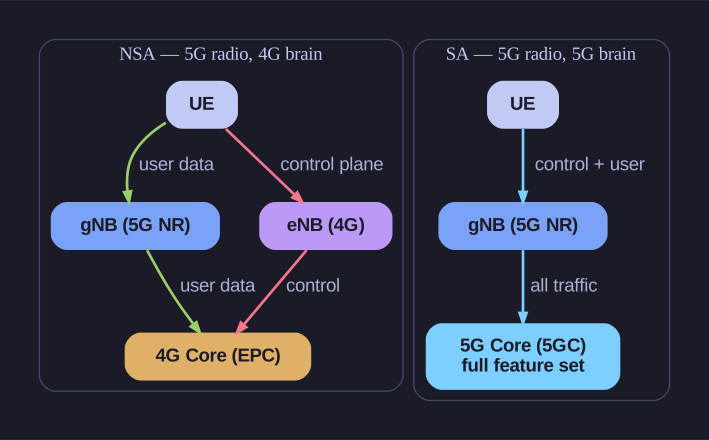
* NSA = 5G radio, 4G brain; SA = 5G radio, 5G brain. *
NSA — Non-Standalone (5G NR + 4G core):
- 5G base stations deployed alongside existing 4G base stations in a region to increase data rate and capacity
- Control-plane traffic between handset and the 4G Mobile Core goes via the 4G base stations
- The 5G base stations are used only to carry the higher-data-rate user traffic
- Fast to deploy — reuses the existing 4G core (EPC)
SA — Standalone (5G NR + 5G core):
- Providers complete their migration by connecting 5G base stations for standalone operation with a full 5G core (5GC)
- Unlocks the complete 5G feature set (network slicing, URLLC, the cloud-native core)
The migration story: NSA is the pragmatic first step — get "5G speeds" on the user plane while leaning on the proven 4G control plane and core. SA is the destination, where 5G finally stands on its own architecture. (3GPP actually defines several intermediate options; NSA and SA are the two headline forms.)
Tip: NSA = "5G radio, 4G brain"; SA = "5G radio, 5G brain." In NSA, the control plane is the tell — it still runs through 4G.
Go deeper:
 GSMA — Road to 5G: Introduction and Migration (PDF) — the operator-industry roadmap that defines the NSA→SA migration options (3GPP Options 3/4/7/2) and the business logic of leaning on the 4G core first.