What are the two main categories of threats in cryptography?
Unintentional errors/failures (unintelligent adversaries) and deliberate attacks by intelligent adversaries.
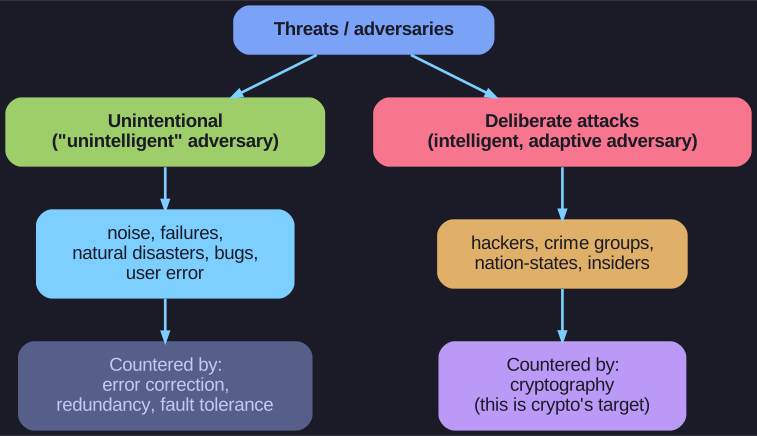
* Two kinds of adversary - and only one is cryptography's job. *
Category 1: Unintentional threats (unintelligent adversaries)
- Transmission noise and interference
- System failures and crashes
- Natural disasters
- Software and hardware bugs
- User errors
These are addressed through error correction, redundancy, and fault tolerance — not cryptography.
Category 2: Deliberate attacks (intelligent adversaries)
- Hackers and crackers
- Criminal organizations
- Nation-state actors and intelligence agencies
- Malicious insiders
- Tech-savvy individuals (script kiddies to advanced)
An unauthorized action by an intelligent adversary is called an attack (Angriff/Attacke).
What cryptography can NOT defend against:
- Denial of Service (DoS)
- Software vulnerabilities (e.g., in the OS)
- Hardware vulnerabilities (e.g., bugs in chips)
- Improper key handling ("you can even encrypt keys incorrectly!")
Tip: An unintelligent adversary is not necessarily a dumb person — it refers to random, non-targeted threats like noise or hardware failure, as opposed to a thinking attacker adapting their strategy.
Go deeper:
 Denial-of-service attack - a concrete threat cryptography cannot defend: availability is attacked by flooding.