Quiz Entry - updated: 2026.07.30
What are the two main frame forwarding methods used by Cisco switches?
Store-and-forward receives the whole frame and checks the CRC before forwarding (catches errors, higher latency); cut-through forwards as soon as the destination MAC is read (lowest latency, no error check).
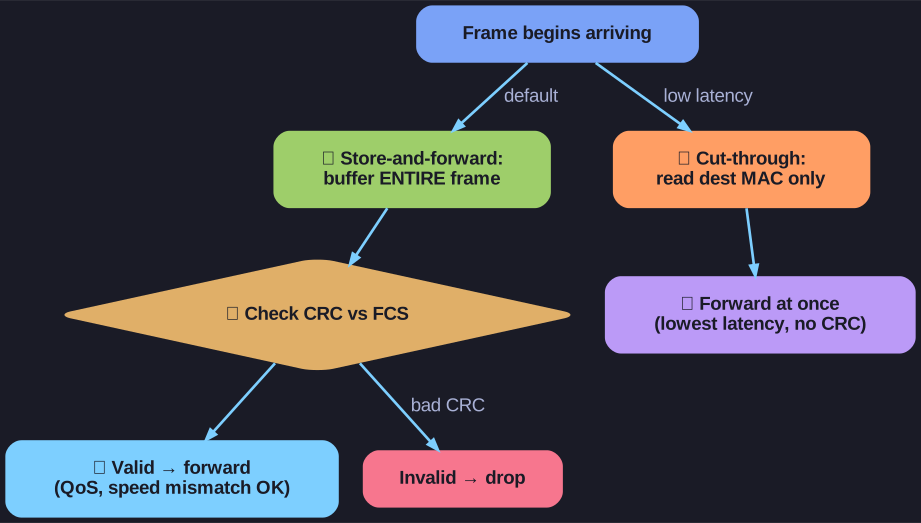
* Store-and-forward buffers the entire frame and validates the CRC before forwarding; cut-through forwards right after the destination MAC with no error check. *
| Method | Description | Error Checking |
|---|---|---|
| Store-and-Forward | Receives the entire frame, computes CRC, then forwards if valid | Yes - checks CRC before forwarding |
| Cut-Through | Begins forwarding before the entire frame is received | No - no error checking |
Store-and-Forward Process:
- Receive entire frame into buffer
- Compute CRC and compare to FCS field
- If CRC is valid → look up destination MAC → forward
- If CRC is invalid → discard frame
Cut-Through Process:
- Read destination MAC address (first 6 bytes after preamble)
- Begin forwarding immediately
- No CRC validation performed
Go deeper:
 Cut-through switching (Wikipedia) — the latency-versus-integrity trade-off against store-and-forward, plus the fragment-free variant.