Quiz Entry - updated: 2026.07.30
What are the two main transport layer protocols and how do they differ?
The two protocols are TCP and UDP: TCP is connection-oriented, reliable, ordered, and has more overhead (20-byte header); UDP is connectionless, best-effort, unordered, and lightweight (8-byte header).
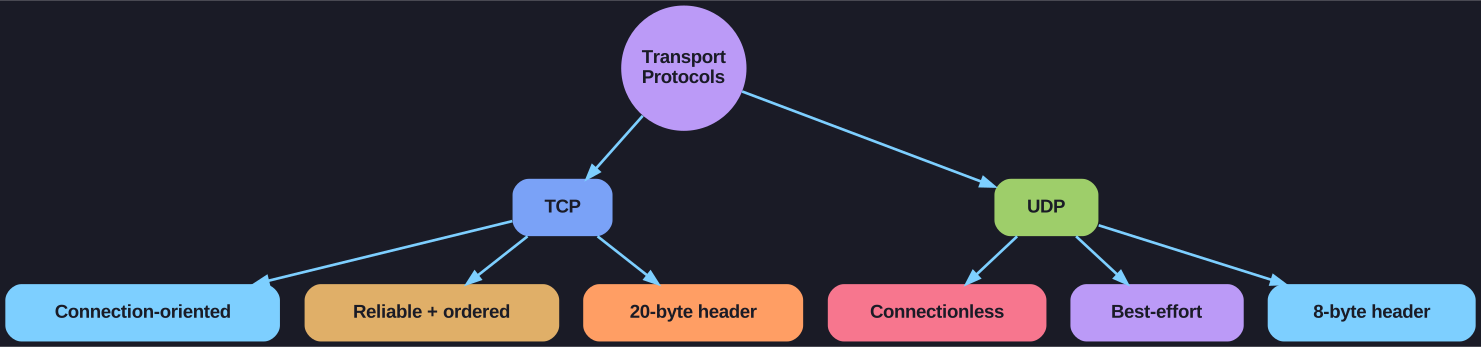
* TCP buys reliability and ordering with a heavier header; UDP stays connectionless and lightweight. *
TCP vs UDP Comparison:
| Feature | TCP | UDP |
|---|---|---|
| Connection | Connection-oriented | Connectionless |
| Reliability | Guaranteed delivery | Best-effort (unreliable) |
| Ordering | Same-order delivery | No ordering |
| Flow Control | Yes | No |
| Acknowledgment | Yes | No |
| Overhead | Higher (20+ bytes header) | Lower (8 bytes header) |
TCP (Transmission Control Protocol):
- Establishes session before sending data
- Numbers and tracks segments
- Acknowledges received data
- Retransmits unacknowledged data
- Like sending tracked packages
UDP (User Datagram Protocol):
- No connection establishment
- No acknowledgment of receipt
- No retransmission of lost data
- Like sending a non-registered letter
Go deeper:
 UDP and TCP: Comparison of Transport Protocols — PieterExplainsTech walks through the differences side by side.
 Transmission Control Protocol — Wikipedia reference for the reliable, connection-oriented side.
- User Datagram Protocol — Wikipedia reference for the lightweight, connectionless side.