Quiz Entry - updated: 2026.07.30
What are the two methods a SLAAC (Stateless Address Autoconfiguration) host uses to generate its 64-bit interface ID?
Random generation (default on modern OSes like Windows 10) or EUI-64 (Extended Unique Identifier (64-bit)) (derives the ID from the host's MAC (Media Access Control) address).
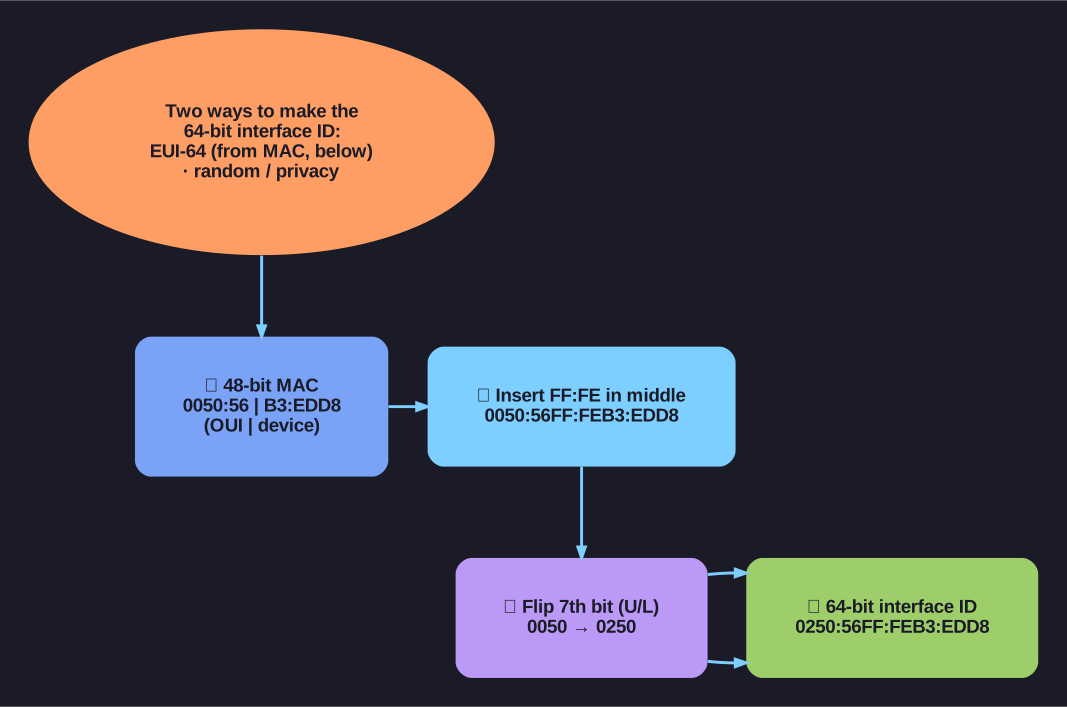
* EUI-64 interface-ID derivation from a MAC address. *
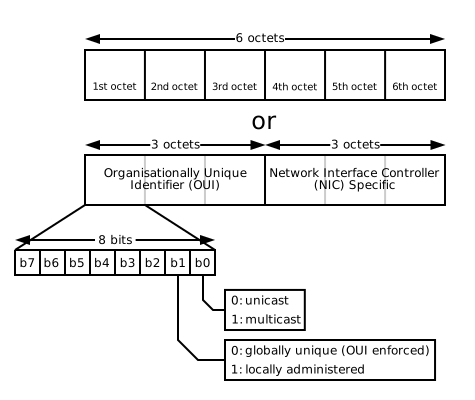
* 48-bit MAC address structure (basis for EUI-64). — Inductiveload, CC BY-SA 2.5, via Wikimedia Commons. *
Method 1 — Randomly generated:
- The OS generates a random 64-bit value for the interface ID
- Default on Windows 10+ and most modern operating systems
- Preferred for privacy — the address changes and doesn't reveal the MAC address
Method 2 — EUI-64 (Extended Unique Identifier (64-bit)):
- Takes the 48-bit MAC address (e.g.,
00:50:56:B3:ED:D8) - Splits it in half and inserts
FF:FEin the middle →0050:56**FF:FE**B3:EDD8 - Flips the 7th bit (Universal/Local bit) →
0**2**50:56FF:FEB3:EDD8 - Result: a deterministic 64-bit interface ID derived from hardware
Privacy concern with EUI-64:
- Because the interface ID is derived from the MAC address, a device can be tracked across networks — same MAC always produces the same interface ID
- This is why modern OSes default to random generation instead
Tip: Both methods can be configured by the user on Windows, Linux, and macOS.
Go deeper:
 MAC address — EUI-64 (Wikipedia) — inserting FF-FE and the modified-EUI-64 U/L bit inversion.
- IPv6 address — privacy addresses (Wikipedia) — the random/privacy interface IDs modern OSes use instead of EUI-64, and why.