What are the two parts of an IP address and what does each identify?
The network portion (prefix in IPv6) identifies which network the device is on and is shared by all devices on that LAN/WAN; the host portion (interface ID in IPv6) uniquely identifies the device within that network.
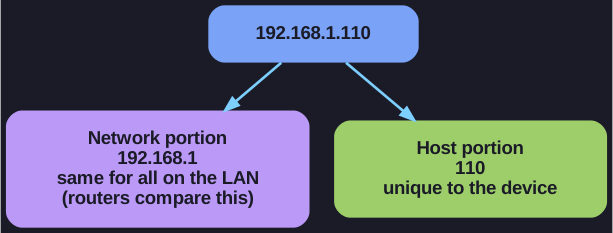
* An IP address splits into a shared network portion and a unique host portion. *
An IP address works like a postal address: part of it names the neighbourhood and part of it names the house. Splitting it this way is what lets routers forward by network instead of tracking every individual device. The two parts are:
-
Network portion (IPv4) / Prefix (IPv6) — the left-most part. It names the network group the address belongs to, and is identical for every device on the same LAN or WAN. This is the part routers compare to decide where to send a packet.
-
Host portion (IPv4) / Interface ID (IPv6) — the remaining part. It is unique to each device within that network, pinning down the one specific machine.
Example: In 192.168.1.110, if the network portion is 192.168.1, then 110 is the host portion — so 192.168.1.110 and 192.168.1.9 are two different houses (hosts) on the same street (network).
Why it matters: comparing network portions is exactly how a host decides "same network → send direct" versus "different network → send to the default gateway."
Go deeper:
 IP address — network prefix and host identifier — the two-part structure and how the subnet mask / prefix length splits it.