Quiz Entry - updated: 2026.07.30
What do "nines of availability" mean, and how much downtime does each level permit per year?
Availability is measured in "nines" — the number of 9s in the uptime percentage. Each additional nine reduces allowed annual downtime by a factor of 10.
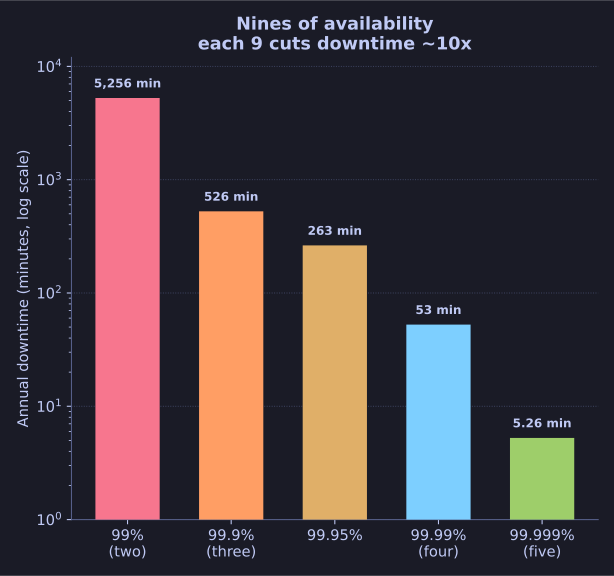
* Annual downtime per availability level — each added nine cuts downtime roughly tenfold. *
Availability levels:
| Availability | Annual Downtime (hours) | Annual Downtime (minutes) | Common Name |
|---|---|---|---|
| 99% | 87.6 hours | 5,256 min | "Two nines" |
| 99.9% | 8.76 hours | 525.6 min | "Three nines" |
| 99.95% | 4.38 hours | 262.8 min | |
| 99.99% | 0.876 hours | 52.56 min | "Four nines" |
| 99.999% | 0.0876 hours | 5.256 min | "Five nines" |
| 100% | 0 | 0 | Theoretical |
Formula: Availability = (Total Time - Total Downtime) / Total Time
Practical context:
- Most consumer services target 99.9% (about 8.7 hours downtime/year)
- Critical infrastructure (banking, healthcare) aims for 99.99% or higher
- 99.999% ("five nines") allows only about 5 minutes of downtime per year — extremely costly to achieve
- 100% availability is theoretically impossible in practice
Tip: Each additional "nine" roughly costs 10x more to achieve than the previous one, because it requires increasingly sophisticated redundancy, failover mechanisms, and operational procedures.
Go deeper:
 High availability (Wikipedia) — the "nines" percentage-to-downtime table.