What does EN stand for, and which bodies produce European standards?
EN = Europäische Norm. Three sister bodies produce them: CEN (general), CENELEC (electrical engineering), and ETSI (telecoms).
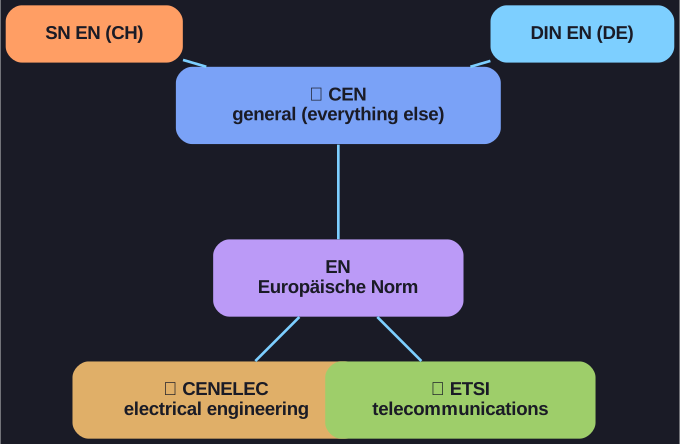
* The EN fan-out: three sister bodies — CEN, CENELEC, ETSI — produce European Norms, which member states then ratify as DIN EN, SN EN, etc. *
The three European standardisation organisations:
| Body | Scope |
|---|---|
| CEN (Comité Européen de Normalisation) | All non-electrical, non-telecom standards (everything else) |
| CENELEC (Comité Européen de Normalisation Électrotechnique) | Electrical engineering |
| ETSI (European Telecommunications Standards Institute) | Telecommunications |
EN standards once ratified are then transposed into national standards by member states; in Germany that's DIN EN, in Switzerland SN EN.
A trend worth noting: international standards (ISO/IEC) are "aufsteigend" — increasingly being adopted as the base of European norms, on which a "Deutsche Norm" can then build.
Tip: A "DIN EN ISO 27001" is a Russian doll: ISO publishes 27001 → CEN adopts it as EN ISO 27001 → DIN ratifies it as DIN EN ISO 27001. Same content, three levels of approval.
Go deeper:
 European Standard (EN) — the three ESOs (Wikipedia) — how CEN, CENELEC and ETSI ratify an EN and how it transposes into national norms.
- European Committee for Standardization / CEN (Wikipedia) — CEN's general remit and its division of labour with CENELEC and ETSI.