What does the 3G UMTS architecture look like, and what are its main components?
3G (UMTS) keeps the 2.5G core (parallel CS voice via MSC/GMSC and PS data via SGSN/GGSN) but replaces the radio access with the UTRAN: Node B base stations controlled by RNCs, using WCDMA/HSPA over the air.
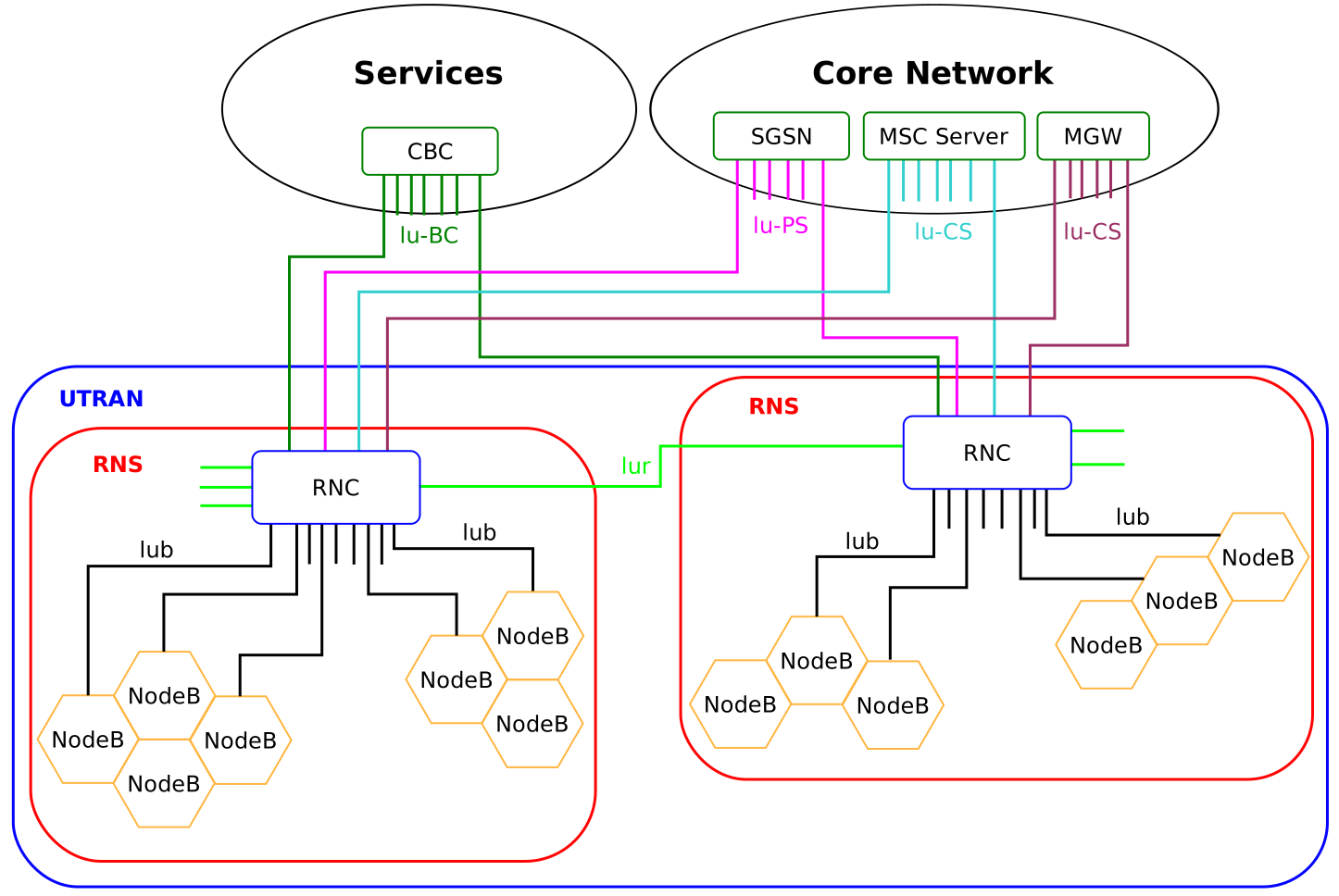
* UMTS architecture: UTRAN plus CS and PS core. — Tsaitgaist, CC BY-SA 3.0, via Wikimedia Commons. *
Radio access network (UTRAN — UMTS Terrestrial Radio Access Network):
| Component | Role |
|---|---|
| UE (User Equipment) | The 3G phone/device (UMTS's name for the MS) |
| Node B | The base station — UMTS's oddly-named radio tower (≈ GSM's BTS) |
| RNC (Radio Network Controller) | Controls a group of Node Bs: radio-resource management, handover, power control (≈ GSM's BSC) |
Air interface: WCDMA (Wideband CDMA), later upgraded to HSPA for higher data rates — this is the big change from GSM's TDMA/FDMA.
Core network — still two parallel domains (inherited from 2.5G):
- CS domain (voice): RNC → MSC/VLR → GMSC → telephone network
- PS domain (data): RNC → SGSN → GGSN → internet
- The RNC is where traffic forks: it routes voice over the Iu-CS interface to the MSC and data over the Iu-PS interface to the SGSN
Key interfaces (UMTS naming):
- Uu — air interface between UE and Node B
- Iub — Node B ↔ RNC
- Iur — RNC ↔ RNC (allows handover between RNCs)
- Iu — RNC ↔ core (split into Iu-CS for voice, Iu-PS for data)
Mental model: 3G is "GSM's two-domain core with a brand-new, faster radio." The voice/data split is unchanged from 2.5G; what's revolutionary is the WCDMA air interface and the Node B/RNC radio architecture. 4G is what finally collapses the two domains into one all-IP core.
Go deeper:
 Harald Welte — What happens on a protocol level when I switch on my phone? (CCC, 2018) — a live, step-by-step trace of the 2G/3G attach that makes the UE → Node B → RNC → MSC/SGSN path concrete (the talk deliberately stops before 4G).
 UMTS (Wikipedia) — the 3G standard end to end: the UTRAN (Node B + RNC), the WCDMA/HSPA air interface, and the GSM-inherited CS/PS core (also feeds this card's architecture-diagram carousel).