What does the name "Linux" mean and why is it sometimes called "GNU/Linux"?
"Linux" is a blend of "Linus" + "Unix." Strictly it names only the kernel, so some insist on "GNU/Linux" to credit the GNU tools that make up the rest of the system.
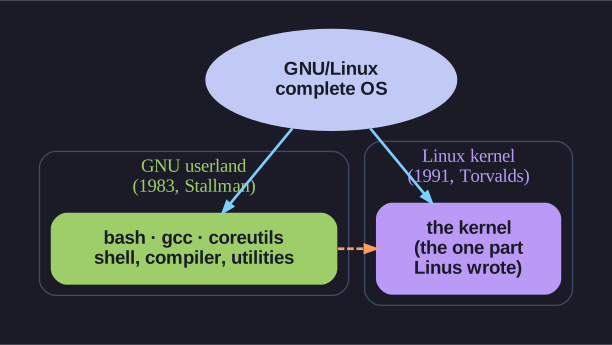
* The split behind the name — GNU supplied the userland, Linux supplied the kernel. *
The naming argument is really an argument about credit. Torvalds wrote the kernel — the engine. But a usable OS also needs a shell, compiler, and hundreds of utilities, and most of those came from GNU, a project that predates Linux by eight years. From the Free Software Foundation's view, calling the whole thing just "Linux" hands all the credit to the engine and none to the car around it.
| Term | Refers to | Championed by |
|---|---|---|
| Linux | Technically the kernel; colloquially the whole OS | Almost everyone |
| GNU/Linux | Kernel + GNU userland | Richard Stallman / FSF |
In practice: common usage won — say "Linux" and people know you mean the full operating system. "GNU/Linux" is the more precise term but you'll rarely hear it outside FSF circles.
Tip: Knowing why the distinction exists (it's about kernel-vs-userland, and about giving GNU its due) is a small detail that signals you actually understand how a Linux system is assembled.