Quiz Entry - updated: 2026.07.30
What factors determine the size of a radio cell, and what is the range of possible sizes?
Cell size depends on geography, antenna type, transmit power, and the mobile standard — ranging from a few meters (femtocell) to 150 km (aviation networks).
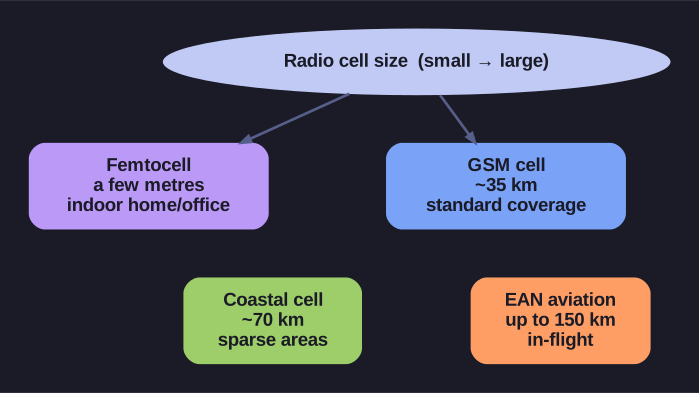
* Cell-size range: femtocell (m) to aviation cell (~150 km). *
Geographic/environmental factors:
- Meteorological and geographic conditions
- Settlement structure (e.g., Manhattan model for dense urban grids)
- Vegetation (trees absorb radio energy, especially at higher frequencies)
Technical factors:
- Antenna height and type
- Permitted transmit power (regulated per country)
- Mobile standard used (GSM, UMTS, LTE, 5G each have different range characteristics)
Size examples:
| Cell type | Typical radius | Use case |
|---|---|---|
| Femtocell (UMTS) | A few meters | Indoor, home/office |
| GSM cell | ~35 km | Standard mobile coverage |
| Coastal cell | ~70 km | Sparsely populated areas |
| EAN (aviation) | Up to 150 km | In-flight connectivity |
Cell breathing: The cell size can dynamically change based on load. When many users connect, the cell effectively shrinks because interference increases — this is called cell breathing.
Go deeper:
 Small cell (Wikipedia) — defines the femto/pico/micro hierarchy and ranges (10 m to a few km) that anchor the small end of the size table.
- Cellular network (Wikipedia) — concrete radii (microcell <2 km, picocell <200 m, femtocell ~10 m) and how frequency affects coverage.