What forensic traces do picking, decoding, and bypass leave inside a lock, and how does FOR Zürich detect them?
Even "non-destructive" entries leave microscopic traces on the cylinder's internal surfaces. Forensic examiners disassemble the lock and look at every pin and the keyway under high magnification.
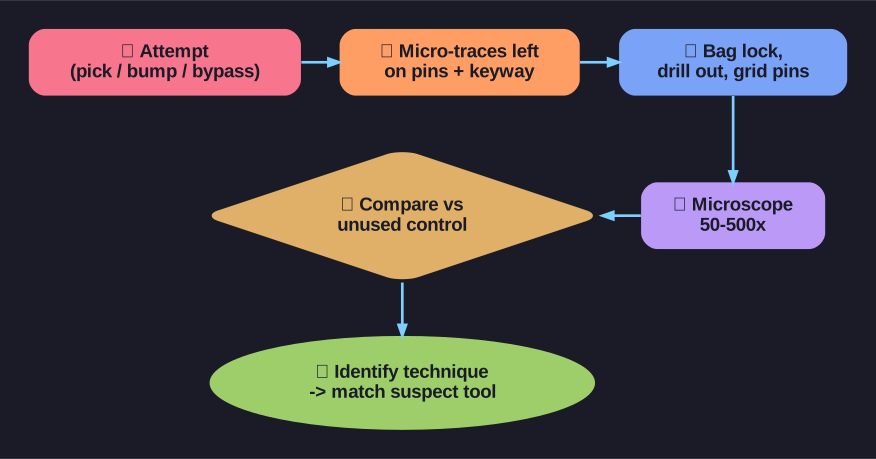
* Forensic lock examination — from attempt to micro-traces to microscope. *
The disassembly process:
When a lock is suspected of being tampered with, forensic investigators:
- Bag and tag the lock from the crime scene.
- Photograph the keyway externally (look for scratches around the entry).
- Drill out the cylinder pins in a controlled lab environment.
- Lay out every component on a marked grid — each pin numbered by position.
- Photograph each pin at 50–500× magnification.
- Compare against a control sample of an unused identical cylinder.
Traces on the Kernstift (the bullet-shaped key pin):
| Trace pattern | What it indicates |
|---|---|
| Faint diagonal scratches across the rounded tip | Pick pressed against the pin while plug rotated — Single Pin Picking |
| Star-burst pattern at the apex | Pick gun (multiple percussion strikes) |
| Flattened tip (microscopic) | Bumping (impact deforms a tiny amount) |
| Lateral scrape marks on the side | Comb pick or rake — pin was pushed all the way up |
Traces in the keyway (the long brass channel the key slides into):
| Trace | Source |
|---|---|
| Scratches in the bottom corner | Tension wrench (always at the bottom) |
| Diagonal scratches across the keyway | Pick withdrawal under tension |
| Symmetric arc marks | Lishi tool's rotational arm |
| Foreign metal traces | Foil key (aluminum residue) — chemically distinct from brass |
Why this matters in court:
The criminal code in many jurisdictions distinguishes between:
- Burglary with destruction (Einbruch) — visible evidence
- Burglary by deception/key abuse (Diebstahl mit erschlichenem Zugang) — was the door actually breached?
If the homeowner says "they got in but I see no damage," the insurance company may dispute the burglary claim. The forensic lock examination is the evidence that turns "I don't know how they got in" into a documented break-in. Without it, claims can be denied.
Investigative limits:
- Time-decayed traces: scratches on pins fade with normal key use after months. Quick analysis is essential.
- Chemical interference: lubricants used by the homeowner can mask or mimic tool marks.
- Forensic-aware criminals: professional thieves swap out the cylinder afterward, replacing it with an identical one. The original — with the evidence — leaves with them.
Tip: After any suspected break-in (insurance or criminal), don't use the lock, don't lubricate it, don't change the cylinder. Photograph the keyway, then have a forensic examination done before any repair. Once you've used the lock again, evidence is degraded.
Go deeper:
 Forensic science — toolmark analysis (Wikipedia) — comparative toolmark examination used to identify manipulation.
- Locard's exchange principle (Wikipedia) — why every picking/bypass attempt leaves recoverable micro-traces.