Quiz Entry - updated: 2026.07.30
What happens in SLAAC Step 1 — generating the link-local address?
The host forms a tentative fe80:: link-local address from its interface ID, then runs Duplicate Address Detection; if no one objects, the address becomes "preferred".
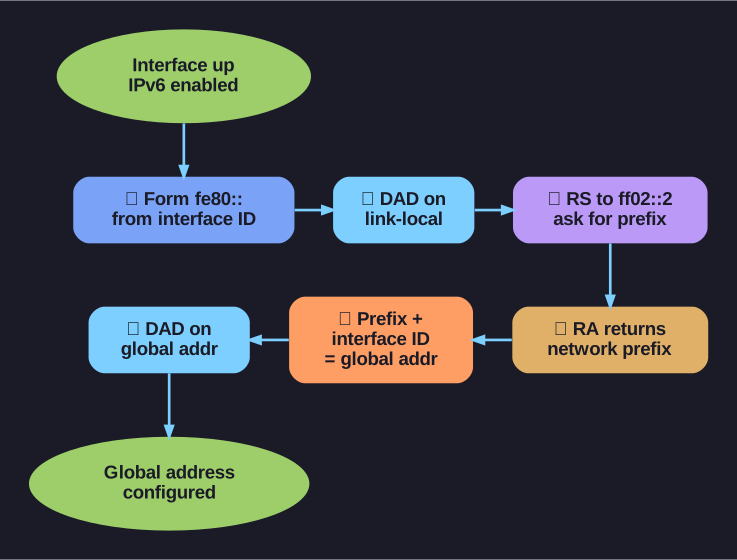
* SLAAC end to end: link-local first, then the router-advertised prefix. *
- The host generates a link-local address (
fe80::…) from its interface identifier — state = tentative - It runs Duplicate Address Detection (DAD): sends a Neighbor Solicitation (with source
::, the unspecified address) to the address's solicited-node multicast group, effectively asking "is anyone already using this?" - If a Neighbor Advertisement comes back → the address is a duplicate → stop autoconfiguration for it
- If silence → no conflict → the address state changes to preferred and is usable
Only after the host has a working link-local address can it talk to the router and proceed to get a global one.
Tip: The source of the DAD probe is :: precisely because the host doesn't yet own any valid address to send from.
Go deeper:
 RFC 4862 §5.3–5.4 — IPv6 SLAAC — link-local formation, the tentative→preferred states, and the DAD step.