What information does a biometric passport (E-Pass) store, and which four crypto protocols protect it?
The chip stores personal data, a digital photo, optional biometrics (fingerprints, iris), and a digital signature. Four crypto sub-protocols protect different aspects: BAC, PA, AA, EAC.
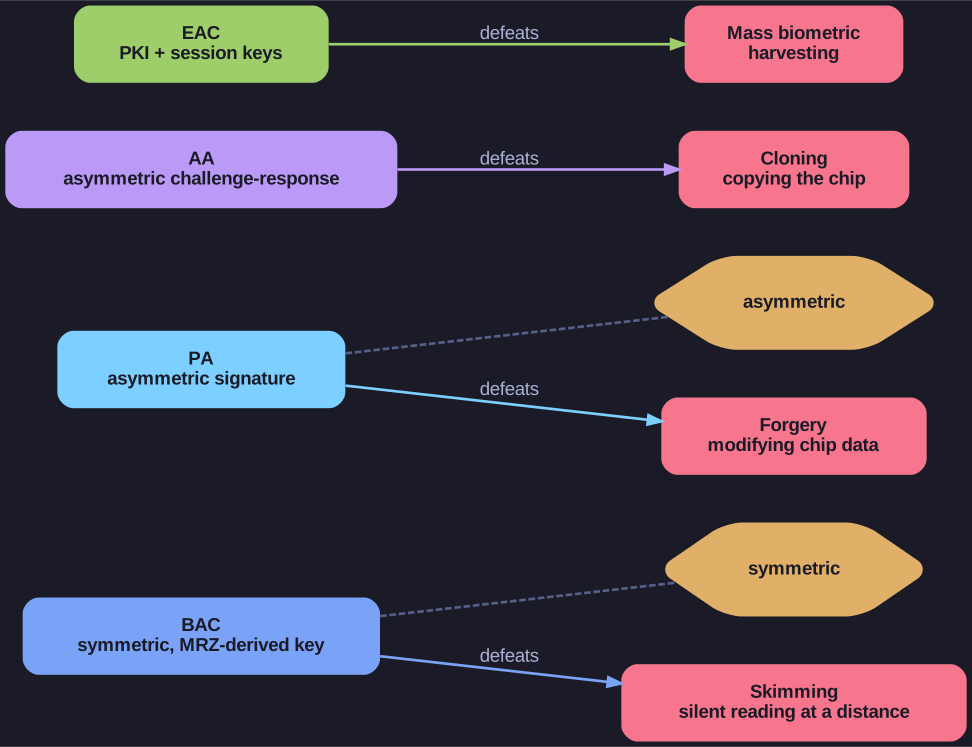
* Each e-passport sub-protocol shuts down a different attack: skimming, forgery, cloning, biometric harvesting. *
Data on the RFID chip:
- Personal data: name, birthdate, citizenship, document number, …
- Digital passport photo
- Optional biometrics: fingerprints, iris scans
- Digital signature over all of the above
The four crypto sub-protocols:
| Name | Goal | Method |
|---|---|---|
| BAC (Basic Access Control) | Prevent unauthorised reading from a distance | Symmetric crypto (3DES / AES) — the key is derived from data printed on the MRZ, which a reader can only access if they have physical sight of the open passport |
| PA (Passive Authentication) | Verify the chip data is authentic and unmodified | Asymmetric crypto — the issuing country signs the data with their private key; a reader verifies with the public key in a country-signing CA |
| AA (Active Authentication) | Prove the chip is genuine (not cloned) | Asymmetric challenge-response — the chip has a private key and signs a fresh challenge from the reader, proving possession of the private key without revealing it |
| EAC (Extended Access Control) | Protect biometrics (fingerprints, iris) from any reader | PKI + asymmetric session keys — only readers with their own valid certificate authorised by the issuing country can decrypt the biometric data |
Two phases of pass life:
- Phase 1 — Issuance: the passport authority generates the chip's private key, signs the data, embeds in the chip.
- Phase 2 — Use: every border control reader runs through BAC → PA → AA → (optionally EAC).
Why so many sub-protocols? Each addresses a different threat:
- Skimming (silent reading from a backpack) — defeated by BAC.
- Forgery (modifying data on a cloned chip) — defeated by PA.
- Cloning (copying the chip) — defeated by AA.
- Mass biometric harvesting (an attacker scanning fingerprints from many passes) — defeated by EAC.
Tip: ICAO Doc 9303 is the international standard that specifies all four — every UN-recognised passport since ~2006 implements the same protocol family. Civil-liberties debates about biometric passes are not about the crypto (which is reasonable) but about who keeps and queries the data.
Go deeper:
 Biometric passport (Wikipedia) — the chip data plus BAC, PA, AA and EAC in depth.