What is 3GPP, and how is it organized?
3GPP, the 3rd Generation Partnership Project, is the global consortium of telecom associations that writes the technical specifications for mobile networks from GSM through 5G.
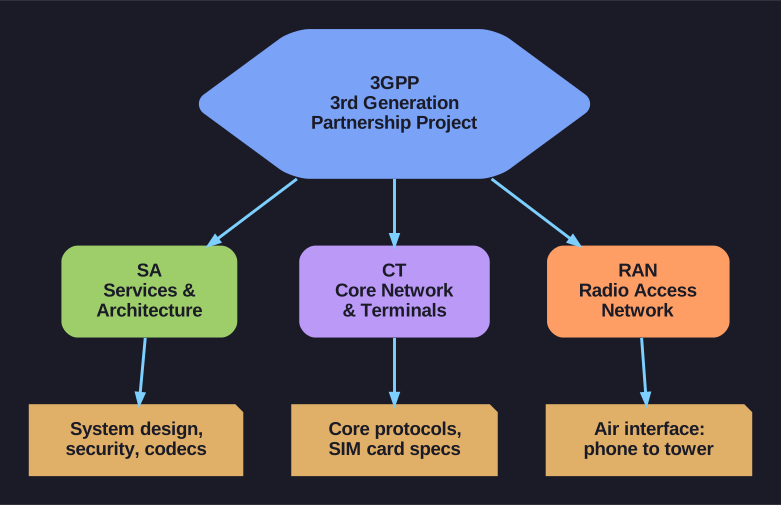
* 3GPP's three Technical Specification Groups. *
Founded: December 4, 1998, by five organizational partners.
Originally created to develop specifications for 3G (UMTS) mobile systems. But 3GPP's scope expanded to cover all major cellular standards: GSM, UMTS, LTE, and 5G NR (New Radio).
How 3GPP works: The goal is to produce Technical Specifications (TS) so precise that any manufacturer's device works flawlessly on any operator's network, anywhere in the world. This interoperability is what lets you buy a Samsung phone in South Korea and use it on Swisscom in Switzerland.
Organized into three Technical Specification Groups (TSGs):
| TSG | Full Name | Responsibility |
|---|---|---|
| SA | Services and Architecture | Overall system design, security, codecs |
| CT | Core Network and Terminals | Core network protocols, SIM card specs |
| RAN | Radio Access Network | The air interface, what goes between phone and tower |
Why this matters for security: If you're studying mobile security, you need to know where the specs come from. Security vulnerabilities in mobile networks often trace back to design decisions in 3GPP specifications. Understanding 3GPP's structure helps you find the relevant spec documents when researching a vulnerability.
Go deeper:
 3GPP (Wikipedia) — the organisational partners, the TSG structure (RAN/SA/CT), and the release process.
- UMTS 3G History (Electronics Notes) — why 3GPP was actually founded (1998, to standardise 3G on evolved GSM) and what its first deliverable, Release 99, contained.