Quiz Entry - updated: 2026.07.30
What is a Base Transceiver Station (BTS) in GSM, and what does it do?
The BTS is the physical radio tower — it contains the antennas, signal processors, and amplifiers that create a radio cell and communicate with mobile devices over the air interface.
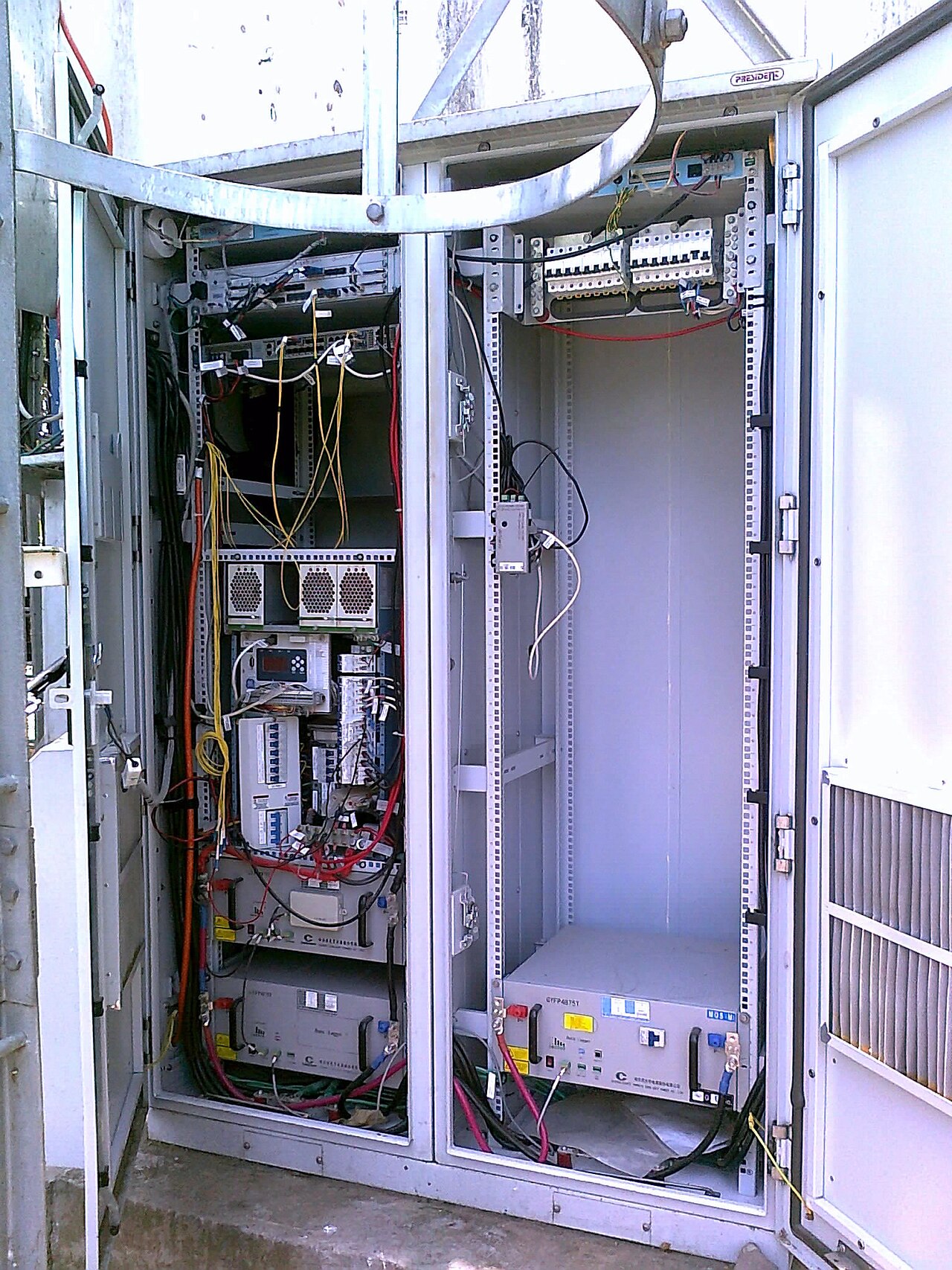
* A GSM base transceiver station tower. — abhiriksh, CC BY-SA 3.0, via Wikimedia Commons. *
Functions:
- Corresponds to one radio cell (or multiple sectors if tri-sectorized)
- Contains the antenna, signal processing hardware, and amplifiers
- Communicates with mobile stations (MS) over the GSM Radio Air Interface (Um interface)
- Connects to the BSC via the Abis interface (typically 16 kbps and 64 kbps links)
Specifications:
- Typical coverage radius: 100 m to 35 km
- Each BTS can support multiple simultaneous connections via TDMA time slots
Real-world: When you see a cell tower on a rooftop or a mast by the highway, that's a BTS. In urban areas, they can be hidden in church steeples, lamp posts, or disguised as trees — but the function is always the same: provide the radio link between your phone and the network.
Go deeper:
 Base transceiver station (Wikipedia) — the BTS hardware (transceivers, antennas, amplifiers) and its Um air interface and Abis link.