Quiz Entry - updated: 2026.07.30
What is a Captive Portal, and where do you encounter it in everyday life?
A web-based authentication gate that intercepts HTTP/HTTPS traffic and redirects users to a login page before granting network access.
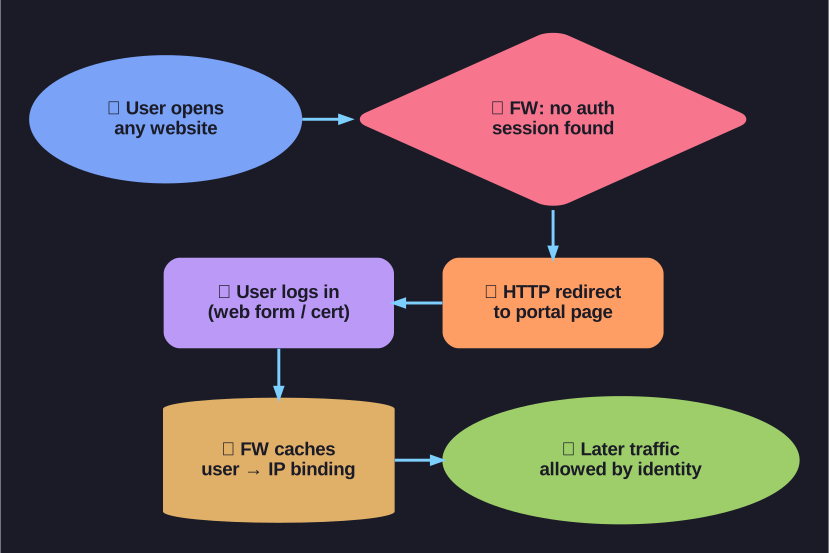
* Captive Portal redirect-and-authenticate flow on the firewall. *
Everyday examples:
- Hotel Wi-Fi: connect → open browser → forced to a landing page asking for room number / accept ToS.
- Airport / café Wi-Fi: same pattern.
- Corporate guest networks: visitor logs in with email or sponsored credentials.
How the FW does it:
- User opens any website.
- FW sees no auth session → instead of forwarding, returns an HTTP redirect to the captive portal page.
- User logs in (web form, certificate, Kerberos, etc.).
- FW caches the user→IP binding for the session timeout.
- Subsequent traffic from that IP is allowed under the user's identity.
Tip: Captive Portal = the firewall pretends to be the website you wanted, just long enough to ask "who are you?"
Go deeper:
 Captive portal (Wikipedia) — the HTTP-redirect mechanism, OS detection probes, and why HTTPS requests can't be silently redirected.