What is a collision domain, and how do switches and duplex settings affect it?
A collision domain is a network segment where simultaneous transmissions can collide. Full-duplex links eliminate collision domains entirely; half-duplex links create them.
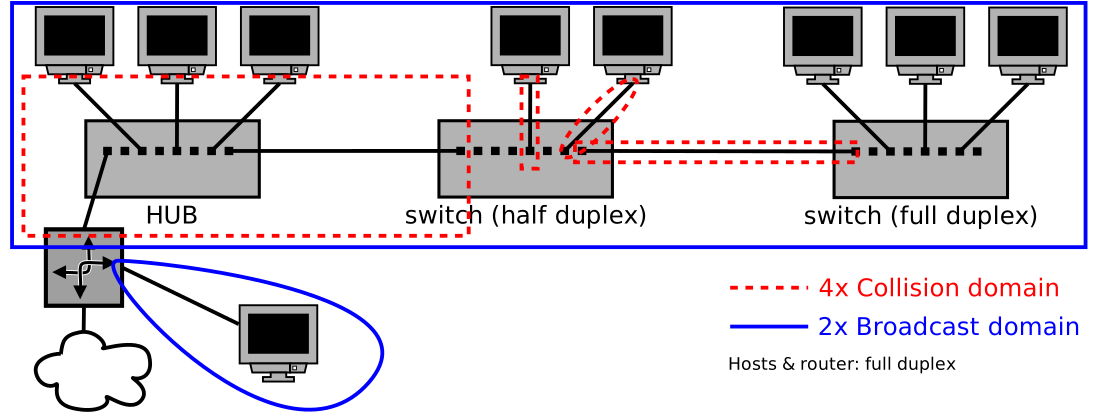
* Collision vs broadcast domains by device. — Mattias.Campe, CC BY-SA 4.0, via Wikimedia Commons. *
Collision domain basics:
- In a collision domain, only one device can transmit at a time
- If two devices transmit simultaneously → a collision occurs and both frames are destroyed
- Devices must use CSMA/CD (Carrier Sense Multiple Access with Collision Detection) to manage access
How duplex affects collisions:
| Duplex Mode | Collision Domain? | Why? |
|---|---|---|
| Full-duplex | No | Separate channels for send and receive — no contention |
| Half-duplex | Yes | Shared channel — devices compete for bandwidth |
The key insight: Each port on a switch is its own collision domain. With old hubs, all ports shared one collision domain. This is the fundamental advantage of switches — they microsegment the network.
Modern switches and NICs (Network Interface Cards) default to auto-negotiation, where both ends agree on the best duplex and speed settings automatically.
Go deeper:
 Collision domain (Wikipedia) — how switch ports shrink collision domains and how full-duplex eliminates collisions entirely.