Quiz Entry - updated: 2026.07.30
What is a designated port in STP (Spanning Tree Protocol), and how are designated ports determined?
A designated port is the port on each network segment that has the best (lowest-cost) path to the root bridge.
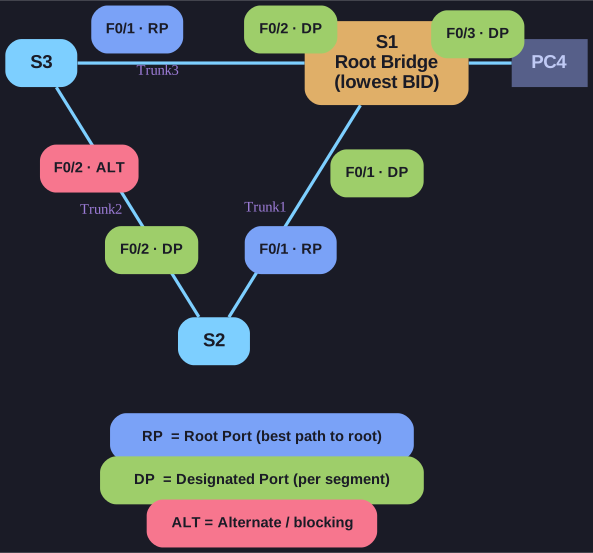
* Port roles on a small network: every root-bridge port is designated; each non-root switch picks one root port; each segment keeps exactly one designated port, and the loser blocks (alternate). *
Rules for designated ports:
- Every segment between two switches has exactly one designated port
- All ports on the root bridge are designated ports (they have cost 0 to the root)
- If one end of a segment is a root port, the other end is a designated port
- All ports connected to end devices (PCs, servers) are designated ports
- On segments between two non-root switches, the port on the switch with the lower root path cost becomes designated
Think of it this way:
- Root port = "my best way TO the root" (one per non-root switch)
- Designated port = "I'm the best way FROM this segment toward the root" (one per segment)
Every active port in STP is either a root port, a designated port, or an alternate/blocked port. There's no other option.
Go deeper:
 Spanning-Tree Port Roles (NetworkAcademy.IO) — one designated port per segment, why all root-bridge ports are designated, lower-cost-wins.