Quiz Entry - updated: 2026.07.30
What is a duplex mismatch and how does it affect network performance?
A duplex mismatch is one end full-duplex and the other half-duplex; communication still works but performance is very poor, which makes it hard to spot.
Duplex Operation and Mismatch Issues:
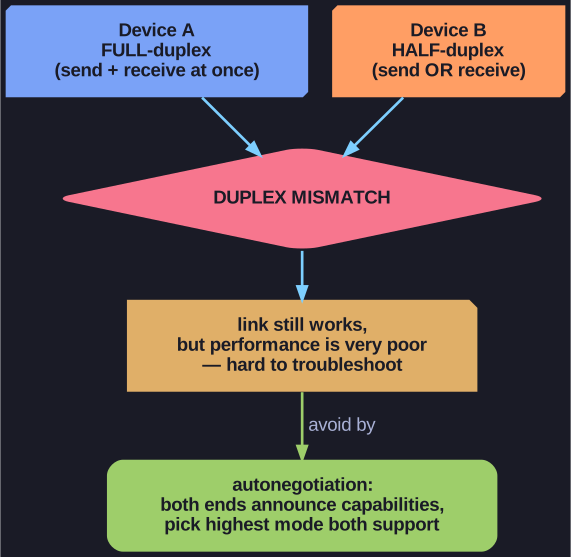
* One end full-duplex, the other half-duplex: the link still works but performs badly. Autonegotiation prevents it. *
Duplex Modes:
- Full-duplex: Can send and receive simultaneously
- Half-duplex: Can only send OR receive at one time
Key requirement: Interconnecting Ethernet interfaces must operate in the same duplex mode for best communication performance and to avoid inefficiency and latency.
Ethernet Autonegotiation:
- Facilitates configuration and minimizes problems
- Maximizes link performance between two interconnecting Ethernet links
- Connected devices first announce their supported capabilities
- Then choose the highest performance mode supported by both ends
Duplex Mismatch: Occurs when one device operates in full-duplex and the other in half-duplex.
Consequences:
- Data communication will still occur
- Link performance will be very poor
- May be difficult to troubleshoot because communication still happens
Common causes:
- Misconfigured interface (one end manually set to a fixed duplex while the other autonegotiates)
- Failed autonegotiation (rare)
Go deeper:
 Wikipedia — Autonegotiation — how two interfaces choose a common duplex, and the dedicated "duplex mismatch" section on why the link degrades.