What is a mix network (mix net), and how does Tor build on the same idea?
A mix net routes messages through a sequence of intermediaries that batch, shuffle, and re-encrypt traffic so the link between sender and receiver is broken. Tor uses a simplified low-latency variant where each hop only sees its predecessor and successor.
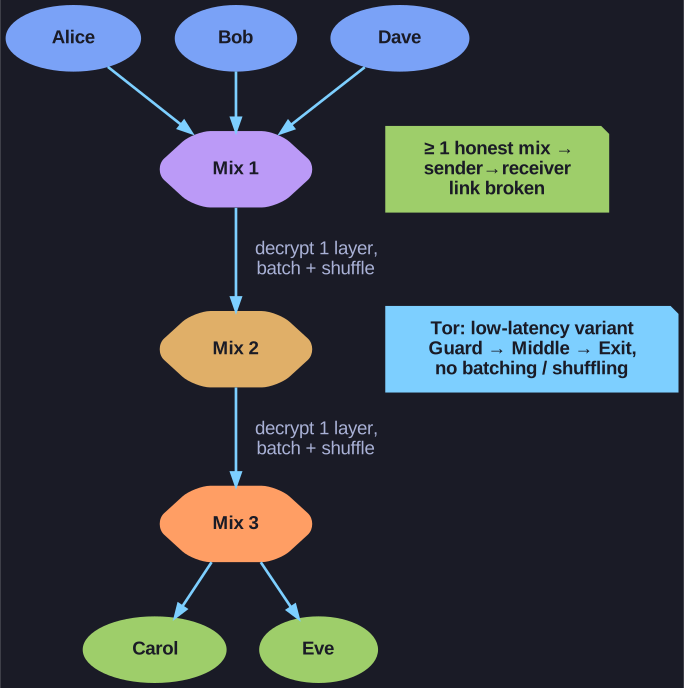
* Each hop peels one onion layer and shuffles the batch — one honest mix severs who-talked-to-whom; Tor drops the batching for speed. *
How a classic Chaum mix net works:
Alice ─┐
Bob   ─┼─▶ Mix 1 ─▶ Mix 2 ─▶ Mix 3 ─▶ Carol
Dave  ─┘                                Eve
Each mix:
- Receives a batch of messages from many senders.
- Decrypts the outermost encryption layer with its private key (onion-routing style).
- Shuffles the batch into a random order.
- Adds dummy traffic if needed.
- Forwards to the next mix.
If at least one mix is honest, the link Alice → Carol is unrecoverable.
How Tor differs:
- Low latency — no batching/shuffling (would add seconds of delay), just onion routing through 3 hops.
- Three relays by default: Guard → Middle → Exit.
- Anonymity vs latency trade-off: Tor sacrifices some anonymity for usable web browsing; pure mix nets (Mixmaster, Nym) give stronger anonymity but with delays of minutes to hours.
Limitations:
- A global passive adversary that observes all network traffic can de-anonymise Tor users via traffic-correlation attacks. Mix nets resist this better because they batch + shuffle.
- Compromising a majority of mixes breaks anonymity in both systems.
Tip: Mix nets are seeing renewed academic interest because of post-quantum concerns — onion encryption can be made post-quantum, but traffic-analysis resistance is unaffected by quantum computers (it's information-theoretic, not computational).
Go deeper:
 Mix network (Wikipedia) — Chaum mixes, batch/shuffle, and the Tor relationship.
- Tor: History — the onion-routing lineage Tor descends from.