What is a solicited-node multicast address and why is it efficient?
A solicited-node multicast address (ff02::1:ff + the last 24 bits of a target address) lets Neighbor Discovery reach a specific host's "group" instead of bothering every node like an ARP broadcast.
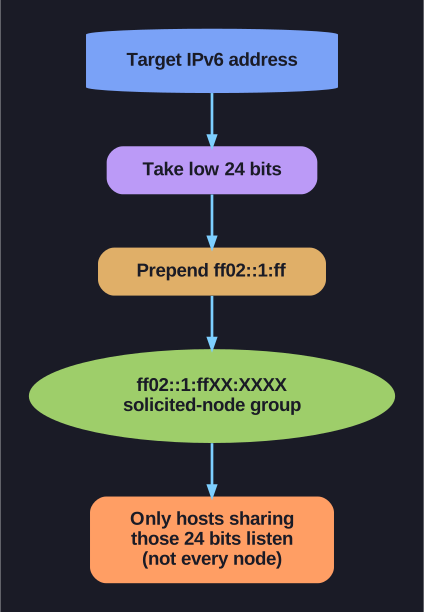
* Mapping a target address to its solicited-node multicast group. *
It's formed as ff02::1:ffXX:XXXX, where XX:XXXX are the low 24 bits of the target's IPv6 address. When a host wants to resolve or check an address, it sends the Neighbor Solicitation to this group rather than to all-nodes.
Why it's clever: only hosts whose address shares those low 24 bits join that particular solicited-node group, so typically only the intended target (and very few others) listen — far less disruptive than IPv4's ARP, which interrupts every host on the subnet with a broadcast.
Tip: This is IPv6 quietly fixing a long-standing IPv4 annoyance: ARP broadcasts that wake up every NIC on the LAN.
Go deeper:
 RFC 4291 §2.7.1 — Solicited-Node Multicast Address — the ff02::1:ff00:0/104 + low-24-bits construction and why it narrows the listener set.