Quiz Entry - updated: 2026.07.30
What is a Use Case Diagram and what does it NOT describe?
It gives a quick high-level overview of which functions the system offers users — but NOT the internal implementation, the step sequence, or detailed responsibilities.
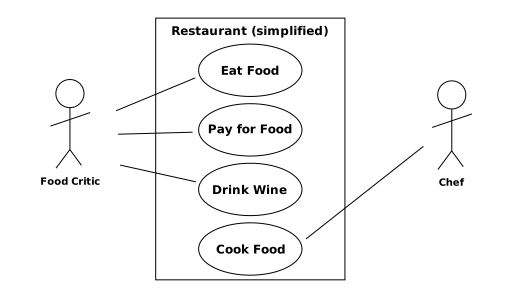
* A UML use-case diagram — actors (stick figures), use cases (ovals), and the system boundary (rectangle). — Slashme, GFDL / CC BY-SA, via Wikimedia Commons. *
A use case diagram lets you gain a quick overview of the functionalities of the specified system.
What it describes:
- Which functions are offered to the user by the system
- How these functions relate to other external interacting entities
What it does NOT describe:
- The responsibilities that the functions have in detail
- The internal implementation of the functions
- The sequence of steps within a use case
Use case diagrams show the "what" at a high level, not the "how" in detail.
UML notation basics:
- Actor: Stick figure (external entity)
- Use Case: Oval/ellipse
- System Boundary: Rectangle containing use cases
- Relationships: Lines connecting actors to use cases
<<include>>: Always includes another use case<<extend>>: Optionally extends another use case
Go deeper:
 Use case diagram (Wikipedia) — the high-level actor/use-case view; shows what, not internal how.