Quiz Entry - updated: 2026.07.30
What is a Use Case (UC) in UML and what perspective does it capture?
A use case captures a functional requirement from the user's outside-in view: who (actor) does what (interaction) with the system, and why (goal).
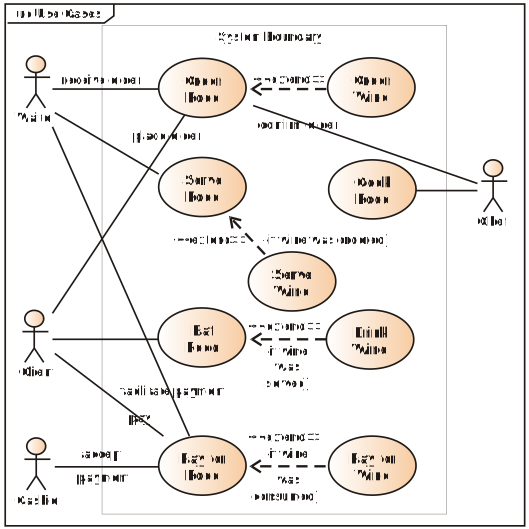
* A use-case diagram — actors outside the system boundary linked to the use cases they drive. — Marcel Douwe Dekker, CC BY-SA 3.0, via Wikimedia Commons. *
A use case deliberately stays on the outside of the system — it describes the value a user gets, never how the code achieves it. That external framing is what makes use cases readable by non-engineers (customers, analysts) and a good place to start a requirements discussion.
A UC answers three questions:
| Question | Element | Example |
|---|---|---|
| Who? | Actor (stick figure) | Customer, Admin |
| What? | Use Case (oval/ellipse) | "Reserve Hotel Room" |
| Why? | Goal/Purpose | Complete a booking |
Key characteristics:
- Drawn as an oval in UML, named with a verb phrase (e.g., "Process Payment")
- Describes a complete sequence of events from the actor's point of view
- External perspective only — no implementation details
- Each UC represents one distinct piece of business functionality
Go deeper:
 Use case diagram (Wikipedia) — UML behavioral diagram: actors, use cases, the outside-in view.