What is an enthymeme, and why are arguments often left in that form?
An enthymeme is an argument with a premise (often the warrant) left unstated — frequently because that missing principle is taken for granted or is controversial.
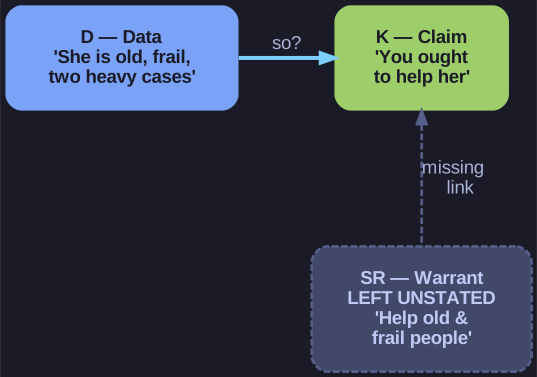
* An enthymeme leaves a premise — usually the warrant — unstated. *
An enthymeme is a shortened inference: a complete argument with a missing premise — typically the warrant (Schlussregel). Example:
"Mark helps an unknown woman off the train because she is old and frail and carrying two heavy suitcases."
- Data (D): the woman is old, frail, carrying two heavy cases.
- Claim (K): you ought to help this woman.
- Missing warrant (SR): "One ought to help old and frail people" — never stated.
Two reasons the premise gets left out:
- It feels self-evident — the moral norm of helping seems too obvious to spell out.
- Sometimes it's deliberately omitted because it's contentious and stating it would force a longer debate.
Tip: Hunting for the unstated premise is a core critical-thinking move. The hidden warrant is often where an argument is most vulnerable — making it explicit lets you actually test it instead of nodding it through.
Go deeper:
 Enthymeme (Wikipedia) — the argument with a hidden/suppressed premise.