What is broadcast addressing?
Broadcast is one-to-all: sent to every device on the local network. It exists only in IPv4, stays within the local network, and can create overhead.
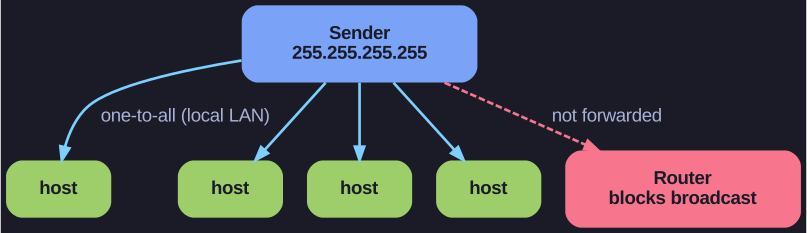
* Broadcast: every local host receives it, but the router blocks it from leaving the LAN. *
Broadcast is the "shout to everyone" mode: a single sender, but every device on the local network receives and must process the frame. It's the tool of last resort — used precisely when the sender doesn't yet know who it needs to reach. Its defining traits:
- One-to-all, so every host's CPU has to look at the packet even if it's irrelevant to them — which is why heavy broadcast traffic creates network overhead.
- Stays local — routers do not forward broadcasts, so a broadcast is confined to its own LAN (a "broadcast domain").
- IPv4 only — IPv6 removed broadcast entirely and uses multicast instead.
The classic use cases are exactly the "I don't know who to ask yet" situations:
- ARP requests — "Who has IP 192.168.1.9? Tell me your MAC."
- DHCP Discover — "Are there any DHCP servers out there to give me an address?"
IPv4 broadcast address: 255.255.255.255 (limited broadcast) or the subnet's broadcast address.
Memory tip: Broadcast = "Everyone can hear it" - like a loudspeaker!
Go deeper:
 Broadcasting (networking) — one-to-all delivery, the broadcast domain, and why IPv6 dropped it.