What is cognitive dissonance, and what did Leon Festinger's study of a doomsday cult reveal about it?
Cognitive dissonance is the discomfort of holding contradictory beliefs or acting against your beliefs — and people often resolve it by strengthening the belief rather than abandoning it.
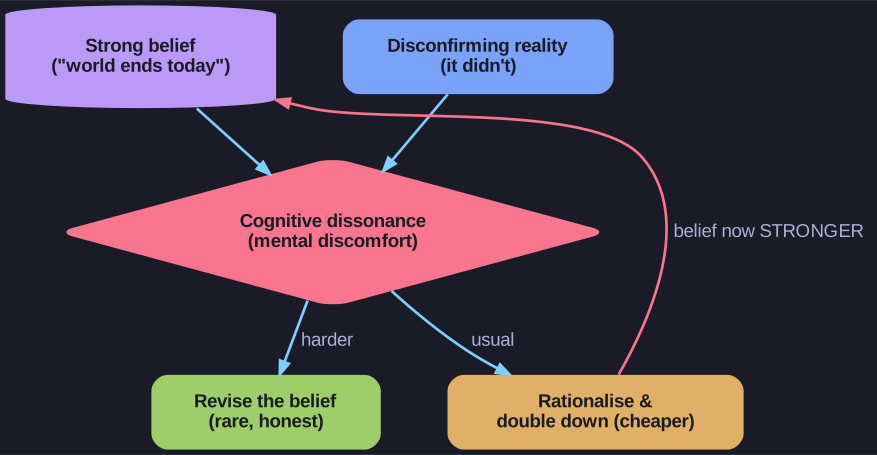
* Belief clashing with reality creates discomfort; the cheap fix is to rationalise and double down — so disconfirmation can make the belief stronger. *
Leon Festinger observed a sect that predicted the end of the world on a specific date. When the predicted apocalypse failed to arrive, members didn't conclude they'd been wrong — instead they produced new explanations (e.g. their faith had "saved" the world) and their conviction grew stronger. The clash between belief ("the world ends today") and reality ("it didn't") created unbearable dissonance, and the cheapest way to reduce it was to double down rather than admit error.
The everyday version is the smoker who knows smoking is harmful: the contradiction between belief and behaviour creates unease, often resolved by rationalising the behaviour rather than changing it. The critical-thinking warning: when disconfirming evidence makes you more certain instead of less, suspect dissonance reduction, not insight.
Go deeper:
 Wikipedia — Cognitive dissonance — the theory and the strategies people use to reduce the discomfort.
- Wikipedia — When Prophecy Fails — Festinger's landmark study of the doomsday cult whose faith grew after the prophecy failed.