Quiz Entry - updated: 2026.07.30
What is DAD (Duplicate Address Detection) and how does it work?
DAD uses ICMPv6 (Internet Control Message Protocol version 6) NS (Neighbor Solicitation) to verify that a newly generated IPv6 address is unique on the local link before the host starts using it.
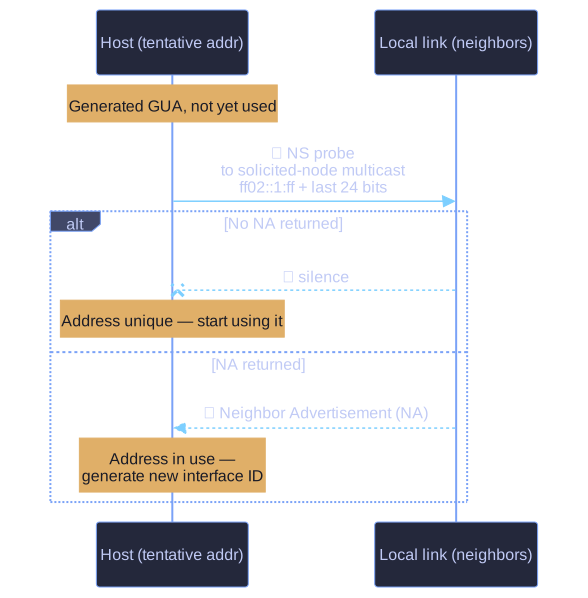
* Duplicate Address Detection via an NS probe. *
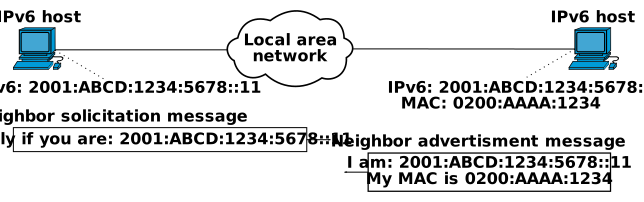
* NS/NA exchange performing Duplicate Address Detection. — Michel Bakni, CC BY-SA 4.0, via Wikimedia Commons. *
The DAD process:
- Host generates its IPv6 GUA (Global Unicast Address) (via SLAAC (Stateless Address Autoconfiguration) or any method)
- Host sends an ICMPv6 NS (Neighbor Solicitation) message to a specially constructed solicited-node multicast address containing the last 24 bits of the new address
- If no NA (Neighbor Advertisement) comes back → the address is unique, host starts using it
- If an NA is received → the address is already in use, host must generate a new interface ID
Why DAD exists:
- Even though the chance of a duplicate is astronomically low (64-bit interface ID = 18 quintillion possibilities), the IETF (Internet Engineering Task Force) recommends performing DAD
- Most operating systems perform DAD on all IPv6 unicast addresses, regardless of how they were configured (SLAAC, DHCPv6 (Dynamic Host Configuration Protocol version 6), or manual)
Solicited-node multicast address format:
- Always starts with
ff02::1:fffollowed by the last 24 bits of the IPv6 address - Example: for address
2001:db8::1234:5678, the solicited-node address would beff02::1:ff34:5678
Go deeper:
 RFC 4862 §5.4 — Duplicate Address Detection — specifies the Neighbor Solicitation probe on a tentative address before assignment.