Quiz Entry - updated: 2026.07.30
What is de-encapsulation and how does it work?
De-encapsulation is the reverse of encapsulation: as data moves up the stack at the receiver, each layer strips off its own header (and trailer) until the application gets a clean data stream.
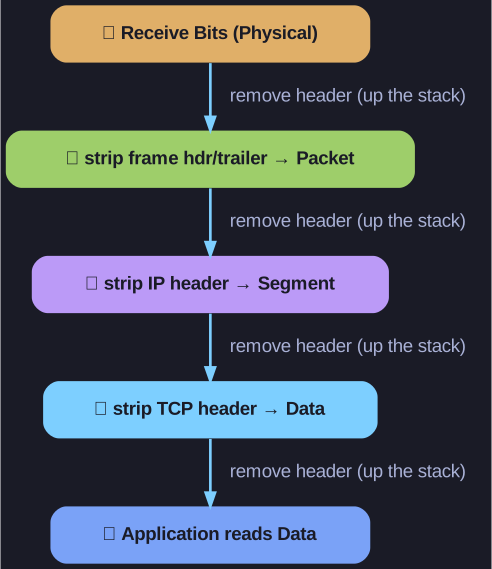
* Each layer strips its own header going up the stack at the receiver. *
Process (receiving):
- Received as Bits (Bit Stream)
- Data Link layer removes frame header/trailer → Packet
- Network layer removes network header → Segment
- Transport layer removes transport header → Data (Data Stream)
- Application processes the Data
Physical:    Receives BITS
Data Link:   Removes frame header/trailer → PACKET
Network:     Removes IP header → SEGMENT
Transport:   Removes TCP/UDP header → DATA
Application: Processes DATA
Key point: When a layer completes its process, it strips off its header and passes the data up to the next level until it becomes a data stream the application can process.
Analogy: Like unwrapping a package — tear off the wrapping, open the box, take the letter out of the envelope, then read it.
Go deeper:
 Encapsulation (networking) — de-encapsulation is the reverse process described here.
- The OSI Model — Practical Networking — shows headers being stripped as data climbs the stack at the receiver.