Quiz Entry - updated: 2026.07.30
What is Garlic Routing in the I2P network, and how does it differ from Tor's Onion Routing?
I2P bundles several messages together ("cloves of garlic") and routes them through a decentralised peer-to-peer network that, unlike Tor, has no connection to the regular Internet.
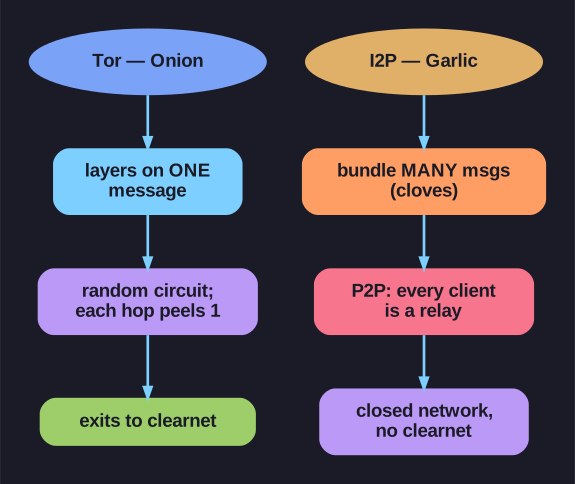
* Onion vs Garlic — Tor layers a single message; I2P bundles many inside a closed P2P network. *
I2P (Invisible Internet Project) runs on a distributed network of computers worldwide where every client is also a relay node. Its distinguishing features:
- Garlic Routing: multiple messages are encrypted and bundled together (like cloves in a bulb of garlic) before sending, which makes traffic analysis much harder than routing single packets.
- Closed network: I2P is a self-contained world with no direct link to the clearnet — by default you stay inside I2P (Tor, by contrast, is built to reach the normal Internet via exit nodes).
- Unidirectional, encrypted tunnels: separate inbound and outbound tunnels carry traffic between nodes.
- Kademlia-based DHT: a distributed hash table stores information about nodes, giving I2P a decentralised structure with no central servers.
Tip: Onion = layers on one message; Garlic = bundling many messages together. Both use layered encryption, but garlic adds the bundling trick.
Go deeper:
 Garlic routing (Wikipedia) — message bundling ("cloves") versus single-message onion layering.
- I2P (Wikipedia) — the closed P2P network where every client is also a relay.