What is hysteresis in UMTS handover decisions, and what problem does it solve?
Hysteresis adds a margin (+H/−H) around the Reporting Range so that a candidate cell must be convincingly better before triggering a change — preventing rapid back-and-forth "ping-pong" handovers when two pilots are nearly equal.
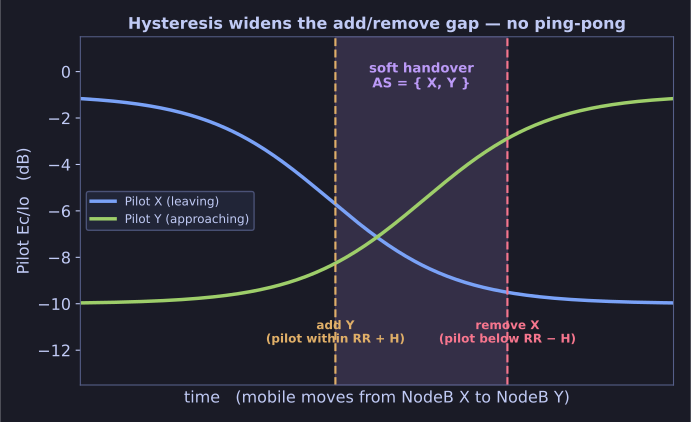
* Pilot X fades while Y rises; the hysteresis margin keeps both in the Active Set through the crossover instead of flapping. *
The measurement procedure:
- The mobile measures the signal strength of the strongest NodeB
- It also measures all other receivable NodeBs
- The gap = difference between each candidate and the strongest NodeB
Where hysteresis comes in:
- The decision thresholds are not a single line but a band: Reporting Range ± H (hysteresis)
- A new cell must close the gap beyond RR plus the hysteresis margin to be added
- A current cell must fall below RR minus the margin to be removed
The problem this solves: at a cell border, two pilot signals are nearly equal and fluctuate constantly (fading!). Without hysteresis, the mobile would add and remove links many times per second — each change costing signaling load and risking drops. The hysteresis band makes decisions "sticky."
Tip: Hysteresis is the same trick your home thermostat uses (heat on below 19°, off above 21° — never flapping at exactly 20°). Same engineering pattern, different domain.
Go deeper:
 Hysteresis (Wikipedia) — the general band/margin principle (with the same thermostat analogy) that prevents rapid back-and-forth switching, exactly the "ping-pong" handover this card describes.