Quiz Entry - updated: 2026.07.30
What is legacy classful IPv4 addressing and what are the five classes?
Classful addressing (RFC 790, 1981) fixed the mask by first-octet range: A (1–126, /8), B (128–191, /16), C (192–223, /24), D multicast, E reserved; it wasted addresses and was replaced by classless (CIDR) addressing.
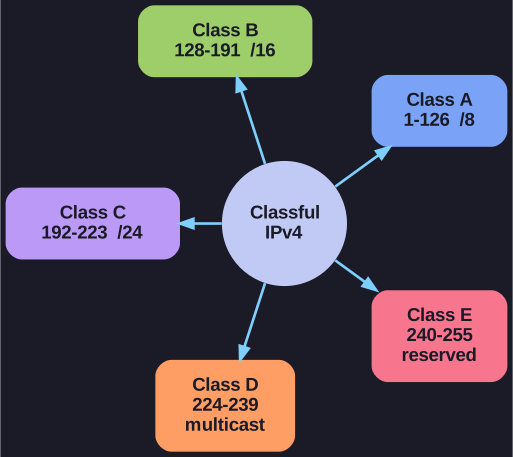
* The five classful ranges, fixed by the first-octet value. *
Legacy Classful Addressing (Historical - replaced by CIDR):
| Class | First Octet Range | Default Mask | Purpose |
|---|---|---|---|
| A | 1-126 | /8 (255.0.0.0) | Large networks (16M hosts) |
| B | 128-191 | /16 (255.255.0.0) | Medium networks (65K hosts) |
| C | 192-223 | /24 (255.255.255.0) | Small networks (254 hosts) |
| D | 224-239 | N/A | Multicast |
| E | 240-255 | N/A | Experimental/Reserved |
Note: 127.x.x.x is reserved for loopback (not Class A)
Why classful addressing is obsolete:
- Wasteful allocation (Class A = 16 million hosts per network)
- Led to rapid IPv4 exhaustion
- Replaced by CIDR (Classless Inter-Domain Routing)
Context: You may still see references to "Class A, B, C" networks, but modern networking uses CIDR with variable-length subnet masks.
Go deeper:
 Classful network (Wikipedia) — all five classes with formats, ranges, and why CIDR replaced them.
- RFC 791 — Internet Protocol (IETF) — Postel's 1981 IPv4 spec that introduced the address classes.