Quiz Entry - updated: 2026.07.30
What is RAII in C++?
RAII = Resource Acquisition Is Initialization: tie a resource's lifetime to an object so its destructor releases the resource automatically.
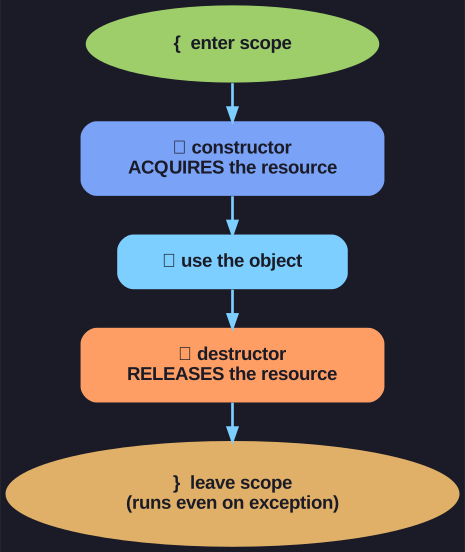
* The constructor acquires, the destructor releases — and because the destructor runs at every scope exit (even during an exception), cleanup can't be forgotten. *
void process() {
    vector<int> v;        // memory acquired
    v.push_back(1);
    // ... use v ...
}   // v goes out of scope -> destructor frees its memory automatically

void readFile() {
    ifstream file("data.txt");   // file opened
    // ... read from file ...
}   // file closed automatically when it's destroyed
Key principle:
- Acquire the resource in the constructor
- Release it in the destructor
- The object's scope then controls the resource's lifetime
Benefits:
- No leaks — cleanup is automatic, even if you forget
- Exception-safe — destructors still run as the stack unwinds during an exception
- No scattered manual cleanup code
Tip: RAII is why smart pointers (unique_ptr, shared_ptr) are preferred over raw new/delete — they're RAII wrappers that delete for you.
Go deeper:
 RAII — cppreference — the idiom defined, with standard RAII types.
- Resource acquisition is initialization — Wikipedia — RAII across languages.