What is "surveillance capitalism," and what is "behavioral surplus"?
Surveillance capitalism is an economic logic that claims private human experience as free raw material, turning it into behavioral-prediction products sold to advertisers. Behavioral surplus is the data captured beyond what's needed to run the service.
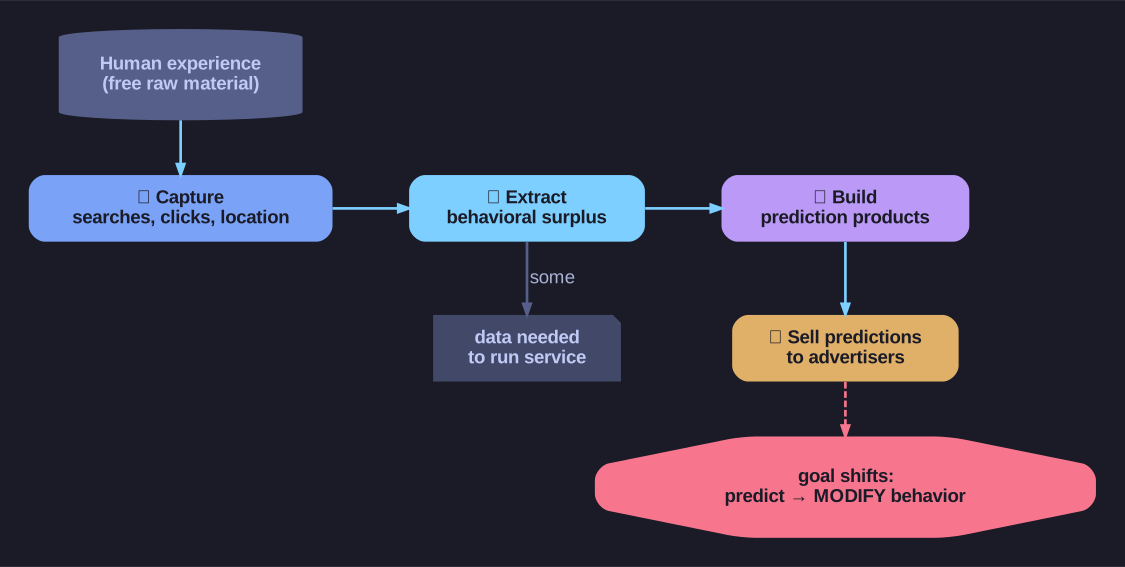
* Surveillance capitalism: human experience becomes behavioral surplus, then prediction products. *
The term was coined by Harvard scholar Shoshana Zuboff to name the business model behind "free" platforms like Google and Facebook.
How the machine works:
- Capture experience — every search, click, like, and location is logged.
- Extract behavioral surplus — only some of that data is needed to provide the service; the surplus is the rest, repurposed for a different goal.
- Build prediction products — the surplus feeds models that predict what you'll do next (buy, click, vote).
- Sell predictions — advertisers (and others) pay for accurate predictions of human behavior.
Why "you're the product": you don't pay with money, you pay with the raw material — your experience. The actual customers are the buyers of behavioral predictions.
The escalation: prediction accuracy improves not just by observing behavior but by nudging it (notifications, recommendations, A/B-tested interfaces). Zuboff warns this shifts the goal from predicting behavior to modifying it.
Tip: Read Zuboff's The Age of Surveillance Capitalism (2019) for the full argument — it reframes "privacy" from a personal preference into a question of who gets to shape human behavior at scale.
Go deeper:
 Surveillance capitalism (Wikipedia) — Zuboff's framework, behavioral surplus, prediction to behavior modification.