What is the 6-3-5 method (Brainwriting) and how does it differ from brainstorming?
A structured, silent brainstorming variant: 6 people each write 3 ideas in 5 minutes, then pass their sheet on — the digits 6-3-5 are people, ideas, minutes (not rounds).
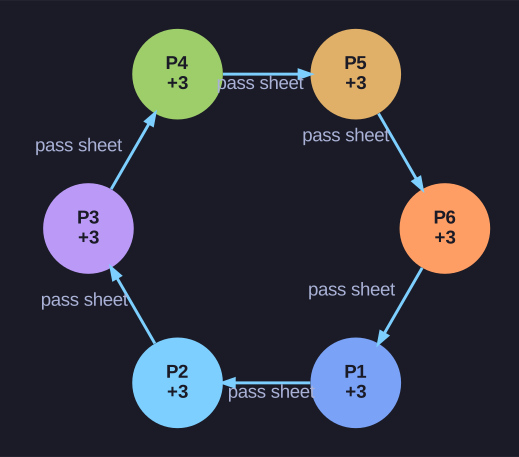
* 6-3-5 brainwriting — 6 people each add 3 ideas per 5-minute round, passing sheets around the ring. *
6-3-5 Method (also called Brainwriting, devised by Bernd Rohrbach):
- 6 people
- 3 solutions/ideas each
- 5 minutes per round
How it works: Each person writes 3 ideas on a sheet within the 5-minute window, then passes the sheet to the next person, who reads what's there and adds 3 more — building on or branching from the existing ideas. The sheet travels around the whole group of 6, so it takes 6 rounds for every sheet to pass through every person. That yields a theoretical maximum of 6 × 3 × 6 = 108 ideas.
Watch the digits: the 5 is minutes per round, not the number of rounds — the round count equals the number of participants (6), because each sheet must visit all of them.
Key difference from brainstorming:
- People are not talking — they write, so the room stays quiet.
- It's not chaotic — a structured, time-boxed process.
- Everyone contributes equally; no dominant personality can drown others out.
- Introverts participate fully.
- Ideas build on each other systematically as sheets circulate.
Go deeper:
 6-3-5 Brainwriting (Wikipedia) — 6 people / 3 ideas / 5 minutes, Rohrbach 1968, the 108-idea maximum, and why silent writing avoids dominant-personality bias.